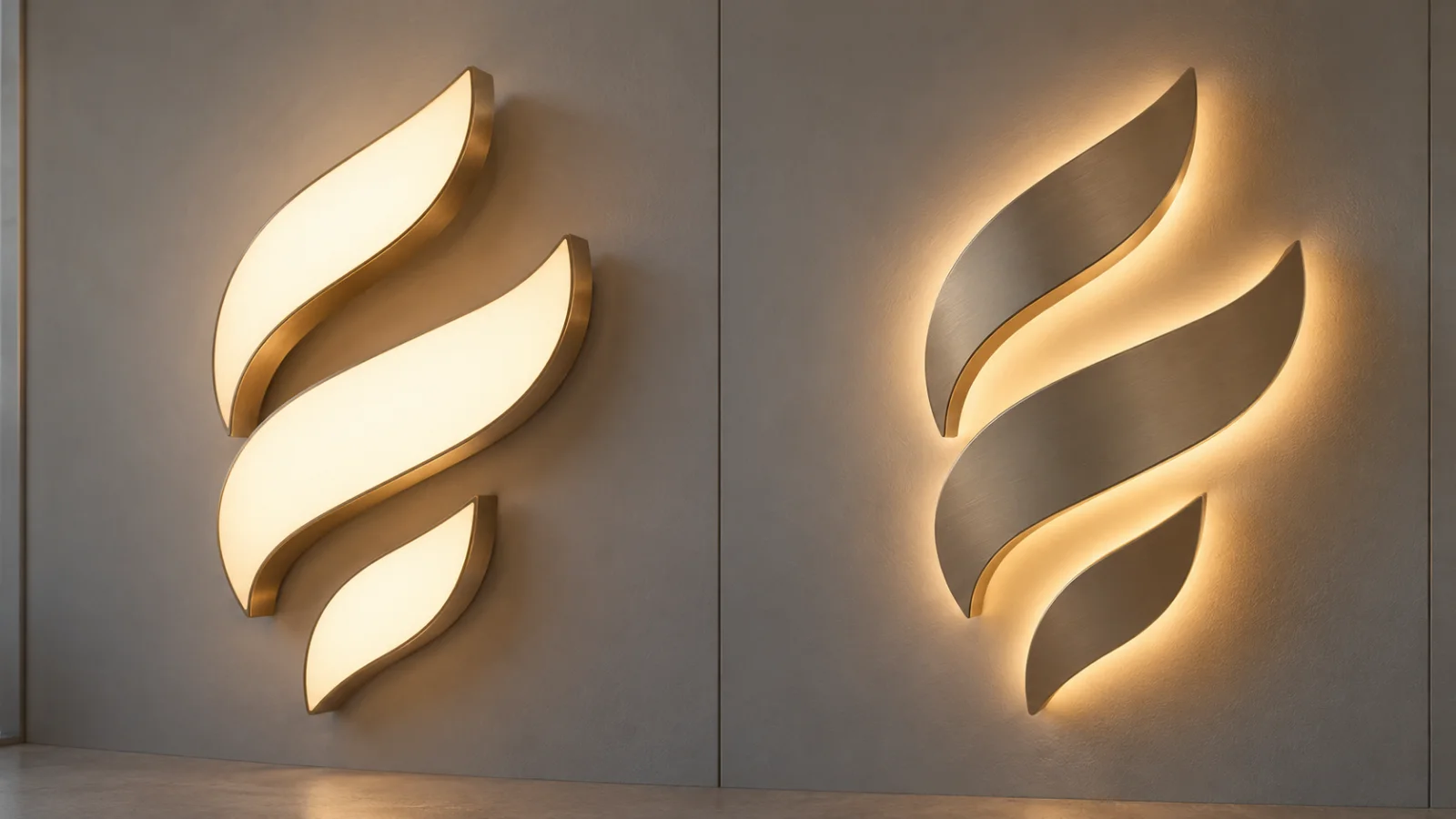
A practical guide for designers and brand teams choosing between two of the most common illuminated letter systems.
Start with the intended appearance
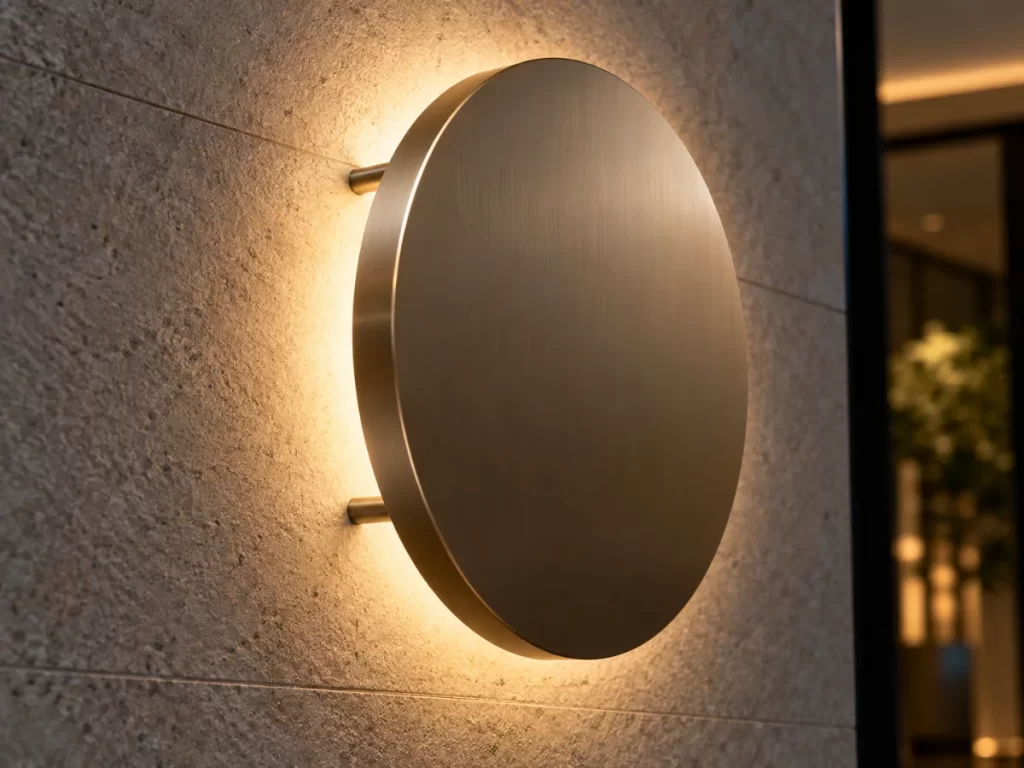
Front-lit and halo-lit letters create different visual effects. A front-lit system presents an illuminated face, while halo lighting places the visible light effect around the letter against its background. The choice should be made with the logo, viewing distance, surrounding light and receiving surface in mind.
Review the wall and the build
A visual reference is only a starting point. The wall finish, letter construction, available depth and fixing arrangement influence the result. Ask the fabricator how power supplies and service access will be accommodated. Where a halo effect is important, review a representative sample against the intended background rather than relying on a digital rendering alone.
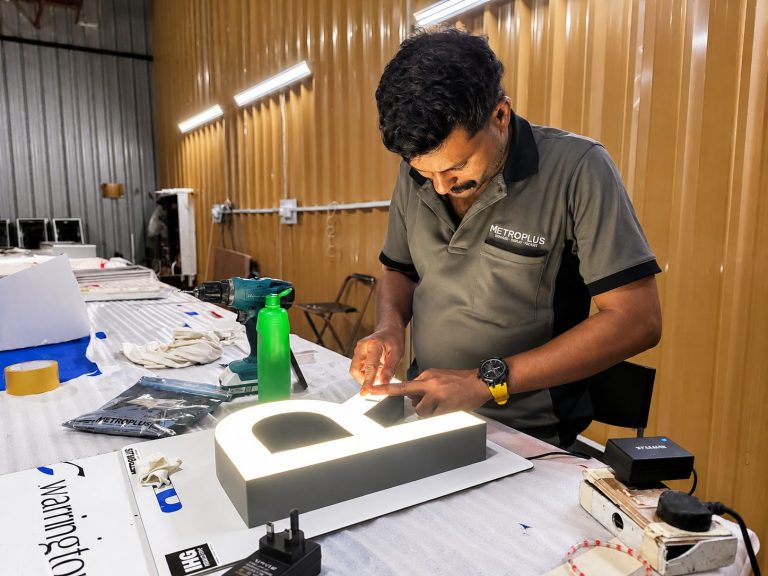
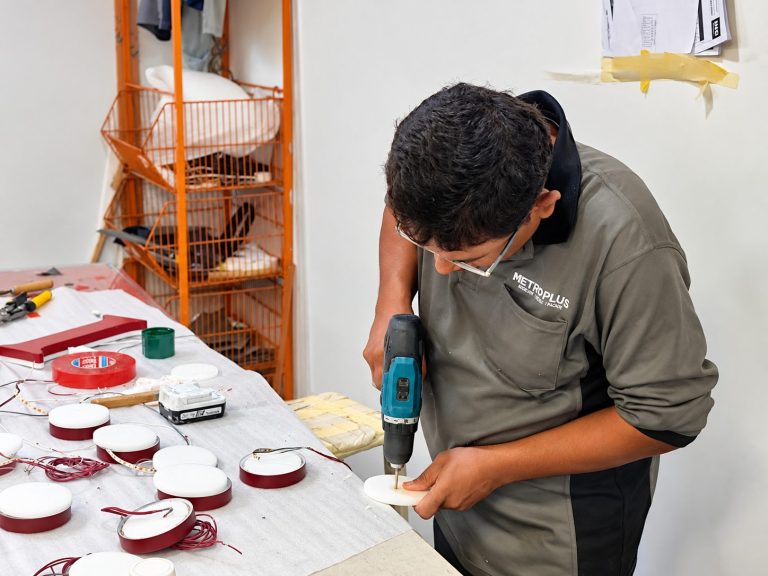
From our workshop
Approve a sample that answers the brief
Compare relevant options under conditions that resemble the installation. Record the approved face, finish, light appearance and surrounding materials. Your final selection should also reflect maintenance access and the brand’s artwork requirements. Share the logo and a photograph of the proposed location with Metroplus for a review of the suitable construction options.
Front and halo lit together
Some premium installations combine both: a translucent face for front illumination plus a halo glow from the back, giving a lit letter face and a surrounding glow at the same time. This is more complex to fabricate but gives the strongest visual presence, and is usually reserved for flagship stores, hotel entrances and high-visibility corporate identity signs.
How the three options compare
| Front lit | Halo lit | Front and halo lit | |
|---|---|---|---|
| Appearance | Bright, solid, high-contrast letter face | Soft glow around the letter on the wall | Both effects together |
| Typical use | Retail branding, storefronts, mall signage | Corporate lobbies, hotels, architectural branding | Flagship stores, premium hospitality entrances |
| Daytime legibility | Strong | Moderate; relies on contrast with the wall | Strong |
| Fabrication complexity | Lower | Moderate to higher (standoff, even glow) | Highest |
| Relative cost | Usually lowest | Usually moderate | Usually highest |
Match the illumination to the brand
Front-lit signage communicates visibility and directness. It is built to be seen and read quickly, which suits high-street retail and busy environments. Halo-lit signage communicates restraint: the glow is felt more than read, which is why it is common in hotel lobbies and premium corporate offices. Choosing between them is as much a brand decision as a technical one.
Fabrication considerations
Halo-lit letters need a return depth and standoff from the wall that spread the LED light into an even glow rather than visible hotspots. Front-lit letters need a correctly diffused face and LED spacing to avoid hotspots showing through the face. Outdoors, both need LED modules and drivers suited to UAE heat, because driver failure from heat is a common cause of illuminated-sign faults.
Questions
What should I send to compare options?
Your logo, a photograph of the proposed location, whether it is indoor or outdoor, the approximate size and the effect you prefer.
Can I see the difference before ordering?
Yes, a representative sample can be reviewed against your intended background before production. The image on this page is a concept, not a measured comparison.
Which costs more, front-lit or halo-lit letters?
Halo-lit letters usually cost somewhat more because of the standoff mounting and the tighter fabrication needed for an even glow. Compare quotations for the same size, materials and components.
Is halo-lit signage as legible as front-lit during the day?
Usually not to the same degree. Halo lighting relies on contrast against the wall and reads best at dusk, at night or in shaded interiors.
Can front-lit and halo-lit be combined on the same sign?
Yes. It is common for flagship and premium installations and gives the strongest presence, at a higher fabrication cost.
Which option suits a retail storefront?
Front-lit letters are usually preferred for storefronts because they prioritise legibility from a distance, day and night.