UAE Outdoor Signage: Heat, UV, Wind and IP-Rating Checklist
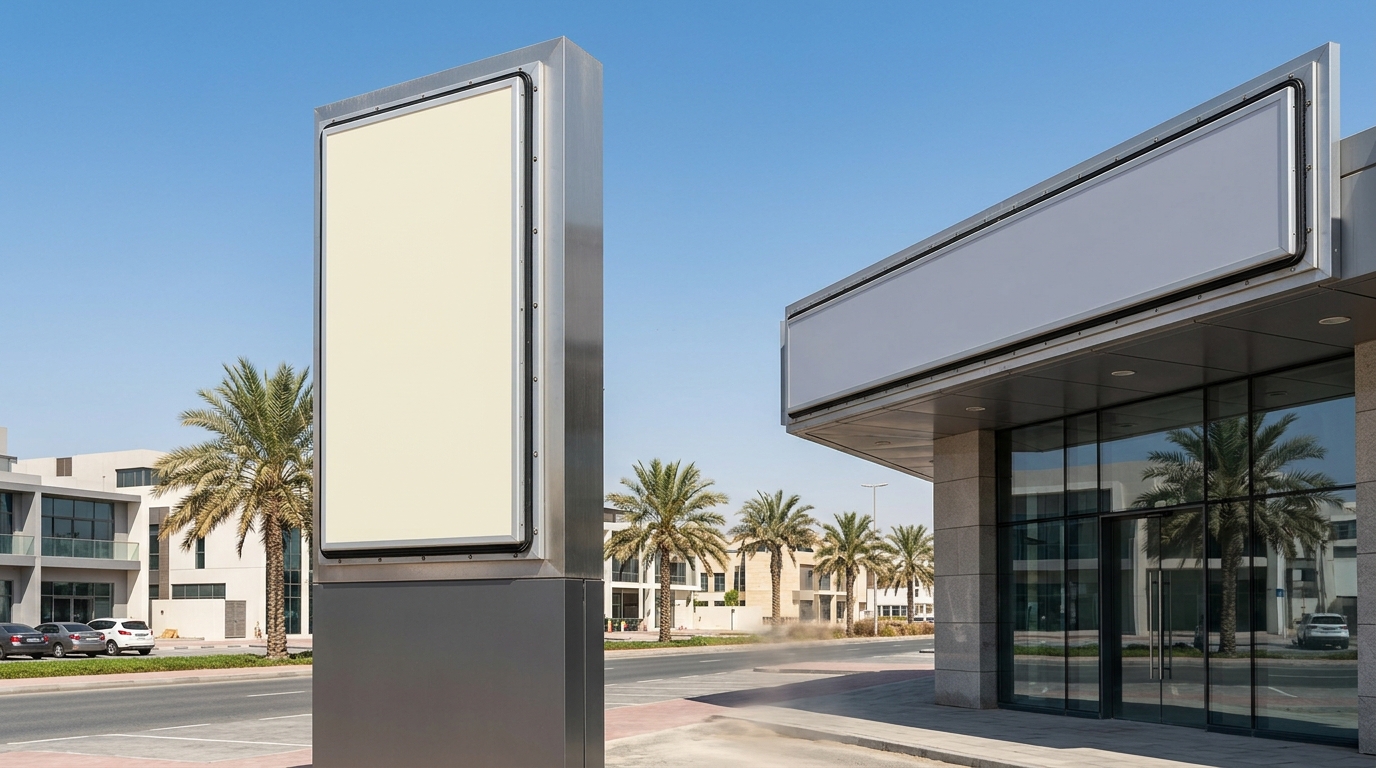
Outdoor signage in the UAE is exposed to sustained high temperatures, intense UV, sandstorms and, for tall or freestanding structures, significant wind loading. This checklist covers what to specify so an outdoor sign performs for its full service life rather than fading, warping or failing early.
Heat and thermal expansion
Surface temperatures on dark-coloured outdoor signage can run well above ambient air temperature in direct UAE sun. Materials and fixings need to allow for thermal expansion and contraction, and adhesives and laminates need a heat rating suited to sustained high-temperature exposure, not just standard indoor-rated products.
UV resistance
Printed graphics, vinyl and coloured acrylics fade under UV exposure over time. Specifying UV-stable inks, laminates and pre-coloured (rather than printed) acrylic where possible extends colour life significantly compared with standard indoor-grade materials used outdoors.
Wind loading and structure
Pylon signs, monument signs and large facade elements need structural engineering sized to the sign’s wind-exposed area and local wind-load requirements, with foundations and fixings engineered accordingly — see Pylon and Pole Signage for structural pylon work.
Ingress protection (IP rating)
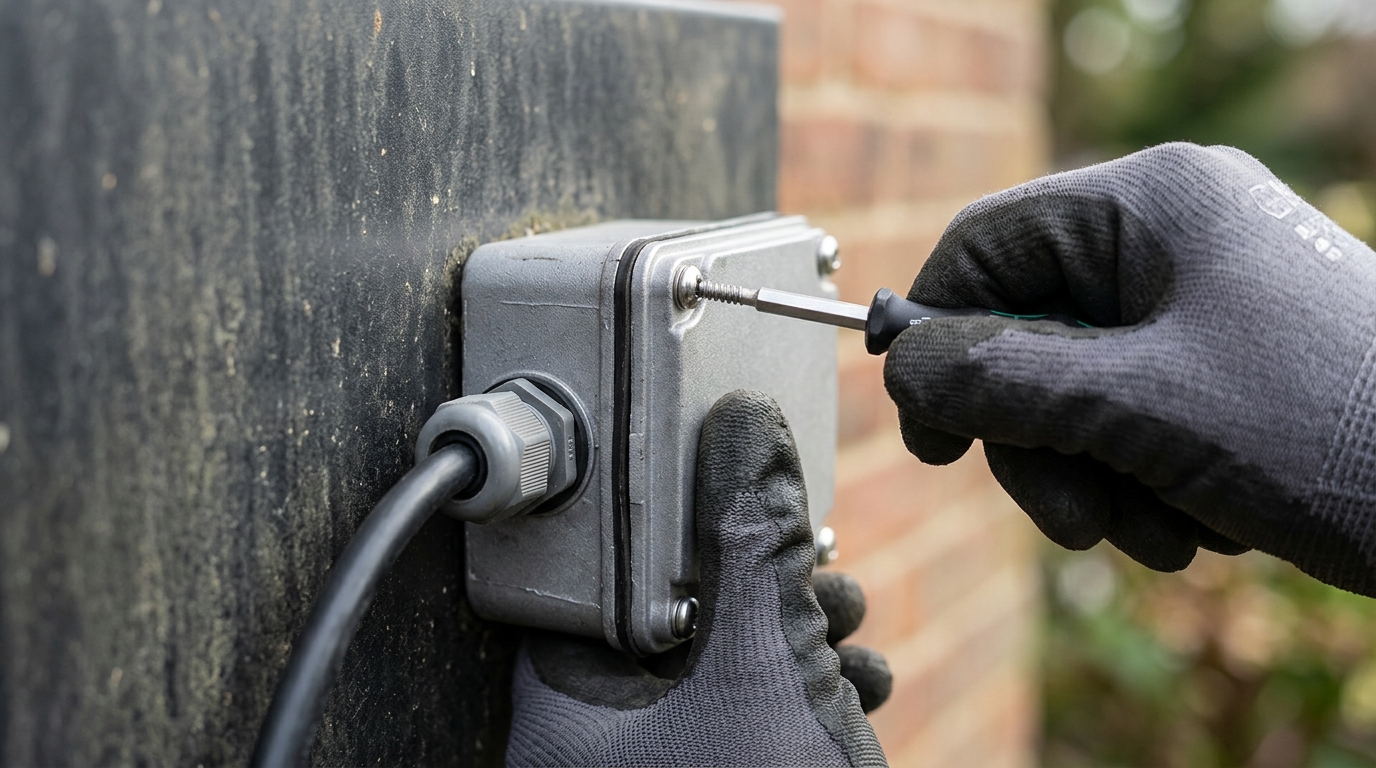
Any illuminated or electronic outdoor sign needs an appropriate IP rating for its exposure: dust and sand ingress from desert conditions, and occasional heavy rain during winter months. LED modules, drivers and junction boxes rated for outdoor use protect against both dust ingress and moisture-related failure.
Maintenance access
Outdoor signs need planned access for cleaning sand/dust buildup and servicing illumination components — see Signage Maintenance for planned inspection and repair.
Specify outdoor signage correctly the first time
Share your sign type, location and structure and our team will specify materials, finishes and structural requirements suited to UAE outdoor conditions. See Outdoor Signage Solutions or contact us to start a quote.
IP Rating Reference for Outdoor Signage
IP (Ingress Protection) ratings describe two things: resistance to solid particles (first digit) and resistance to liquid (second digit). For UAE outdoor signage, both matter — fine desert dust as much as seasonal rain.
| IP rating | Dust protection | Water protection | Typical UAE application |
|---|---|---|---|
| IP54 | Limited dust ingress protected | Splash-resistant from any direction | Sheltered outdoor signage, covered walkways, canopies |
| IP65 | Fully dust-tight | Protected against low-pressure water jets | Standard exposed illuminated signage, fascia lettering, LED modules |
| IP66 | Fully dust-tight | Protected against high-pressure water jets | Coastal and highly exposed sites, pylon sign electronics |
| IP67/IP68 | Fully dust-tight | Protected against temporary or continuous submersion | Ground-recessed fixtures, low-level lighting near irrigation or flooding-prone areas |
Material Suitability by Exposure Level
| Material | Heat/UV performance outdoors | Best suited to |
|---|---|---|
| Pre-coloured (through-body) acrylic | Excellent — colour is not surface-applied, so it does not fade like printed finishes | Fascia lettering, illuminated cabinet faces |
| Printed vinyl on acrylic/ACP | Moderate — UV-stable inks and laminate extend life, but will fade faster than pre-coloured material | Graphics that are refreshed periodically, promotional signage |
| Powder-coated aluminium | Very good — powder coat is UV-resistant and does not chalk as quickly as paint | Structural frames, pylon cladding, fascia boxes |
| Stainless steel (brushed or mirror) | Excellent thermal and UV stability, though surface can get very hot to touch | Dimensional lettering, high-end facade cladding |
| PVC/foam board | Poor for long-term outdoor use — warps under sustained heat | Short-term or temporary outdoor signage only |
Seasonal Considerations for UAE Outdoor Signage
Outdoor signage in the UAE effectively faces two distinct stress seasons rather than one steady climate:
- Summer (roughly May-September) — sustained air temperatures above 40°C and surface temperatures on dark cladding well beyond that put the greatest stress on adhesives, laminates and thermal expansion joints; this is when under-specified materials are most likely to warp, delaminate or discolour.
- Shamal and sandstorm periods — wind-driven sand accelerates surface abrasion on lower-gloss finishes and tests seal integrity on any enclosure rated below IP65, since fine dust finds its way through weaker gaskets.
- Winter rain (roughly December-February) — although infrequent, UAE winter rain can be intense over short periods, which is when inadequate drainage on illuminated cabinets or poorly sealed junction boxes shows up as water ingress.
Frequently Asked Questions
What IP rating does a standard illuminated shopfront sign need in the UAE?
IP65 is the practical minimum for exposed illuminated signage components (LED modules, drivers, junction boxes). Coastal locations or sites with high-pressure cleaning nearby should specify IP66.
How much faster does printed vinyl fade compared with pre-coloured acrylic outdoors in the UAE?
There is no fixed figure since it depends on colour, ink and orientation to direct sun, but printed vinyl on acrylic typically needs replacement or refresh within 2-4 years outdoors, while pre-coloured acrylic can hold its colour for a decade or more.
Do pylon signs need a structural engineering certificate in the UAE?
Most municipalities and civil defence authorities require a structural calculation or certificate for freestanding pylon and monument signs above a certain height, since wind loading on a large sign area is a genuine structural concern, not just a formality.
How often should outdoor signage be inspected once installed?
A basic visual and functional inspection every six months, before and after the peak summer season, catches most issues — seal degradation, connector corrosion, cladding movement — before they become failures.
Recommended Posts

Signage Vendor Checklist for Architects and Consultants
A signage vendor checklist for architects and consultants Selecting a signage vendor requires more than comparing a finished photograph and a lump-sum...
Metroplus Five Year Signage Warranty
Metroplus five year signage warranty Metroplus offers a five-year warranty. When planning your signage, request the written warranty schedule for the ...