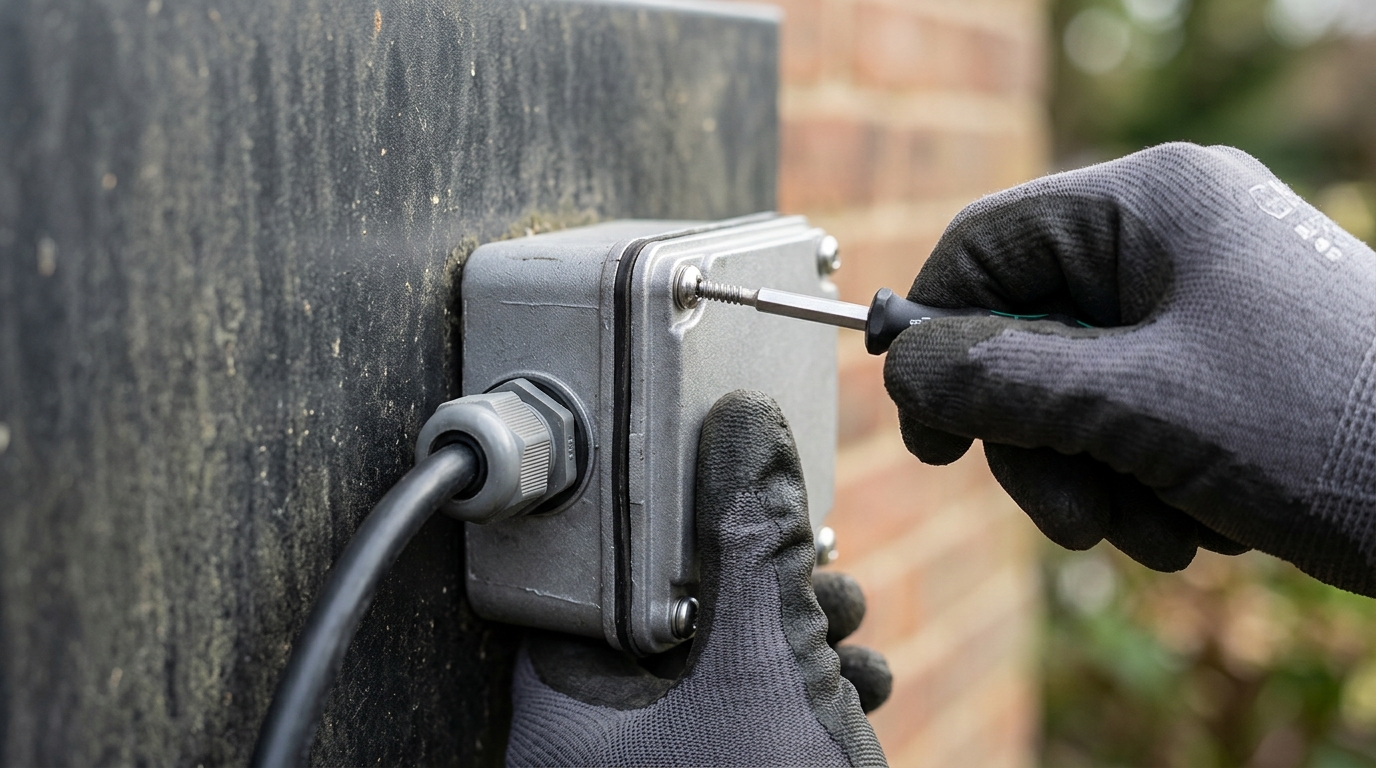
IP65, IP66, IP67 — these ratings appear on almost every outdoor LED and electronic signage datasheet, but the difference between them is frequently misunderstood, and the gap matters more for LED enclosures than for most other outdoor equipment. This is a deep dive into what the IP code actually means, how it’s tested, and why the distinction matters specifically for LED signage and displays in the UAE. For our broader outdoor-signage checklist covering heat, UV and wind alongside IP rating, see the UAE Outdoor Signage Checklist.
How to Read an IP Code
“IP” stands for Ingress Protection, defined under IEC 60529. The code is always two digits: the first digit rates protection against solid objects and dust (0-6), the second rates protection against water (0-9K). So IP65 breaks down as “6” (dust-tight) and “5” (protected against low-pressure water jets from any direction). A higher number in each position means stronger protection, and the two digits are independent — a rating with a lower first digit and higher second digit is possible, though uncommon for signage.
IP65 vs IP66 vs IP67: What Actually Changes
| Rating | Dust Protection | Water Protection | Test Method |
|---|---|---|---|
| IP65 | Dust-tight (6) | Low-pressure water jets, any direction (5) | 6.3mm nozzle, 12.5 L/min at ~3m distance for 3 minutes |
| IP66 | Dust-tight (6) | Powerful water jets, any direction (6) | 12.5mm nozzle, 100 L/min at ~3m distance for 3 minutes |
| IP67 | Dust-tight (6) | Temporary immersion up to 1m depth (7) | Full immersion for 30 minutes at 1m depth |
Why the Difference Matters for LED Enclosures Specifically
LED modules and drivers combine two things that don’t mix well with moisture: dense electronics and heat-generating components that need ventilation. An enclosure rated IP65 is protected against directional water jets (relevant to wind-driven rain and jet-wash cleaning) but is not rated for standing water or immersion — which matters for LED cabinets mounted low on facades or near ground level where flooding, heavy rain pooling or pressure-washing during maintenance could otherwise force water past a lower-rated seal. IP66 is now the practical minimum most reputable outdoor LED manufacturers specify for cabinet fronts exposed to weather, with IP65 sometimes used for rear-access panels that are more sheltered.
Front vs Rear IP Ratings on the Same Cabinet
A detail that catches out many buyers: outdoor LED cabinets are often given two separate IP ratings — a higher rating (e.g. IP66) for the front, water and dust-facing side, and a lower rating (e.g. IP54) for the rear maintenance access panel, which faces the building or is sheltered by the cabinet itself. Always check the datasheet for both figures rather than assuming a single quoted rating applies to the whole enclosure.
Testing and Certification
IP ratings should be verified by accredited third-party lab testing to IEC 60529, not just claimed on a datasheet. When specifying outdoor LED for a large facade or billboard project, request the manufacturer’s test certificate referencing the exact model and enclosure revision, since IP rating can change between hardware revisions even under the same product name.
What This Means for UAE Specification
For outdoor LED displays in the UAE, IP65 is a reasonable minimum for sheltered or elevated installations away from ground-level water exposure, while IP66 is the safer default for facade-level, low-mounted or coastal installations exposed to wind-driven rain, dust storms and pressure-wash cleaning. IP67 is generally reserved for below-grade or flood-risk-adjacent installations and is uncommon for typical signage use.
Frequently Asked Questions
Is IP66 always better than IP65?
For water resistance, yes — IP66 withstands more powerful water jets than IP65. Both offer the same (highest) level of dust protection, since the first digit is identical.
Do I need IP67 for outdoor signage in Dubai?
Usually not, unless the installation is at risk of temporary flooding or ground-level water pooling. IP65 or IP66 covers the vast majority of outdoor UAE signage and LED display applications.
Can an IP65-rated sign be used near the coast?
It can, but IP66 is generally the safer specification near the coast given wind-driven rain, salt spray and more frequent pressure-washing maintenance in those environments.
Does IP rating account for heat or UV resistance?
No. IP ratings only cover dust and water ingress. Heat and UV resistance are separate material and component specifications that need to be checked independently.
Specifying outdoor LED or electronic signage and unsure which IP rating you actually need? Contact Metroplus with your installation location and we’ll confirm the right spec.
Recommended Posts
LED Signage Retrofit: Repair or Replace Your Lighting
Should you repair, retrofit or replace an illuminated sign? An unlit or uneven sign does not always need complete replacement. It may need a local rep...

Signage Vendor Checklist for Architects and Consultants
A signage vendor checklist for architects and consultants Selecting a signage vendor requires more than comparing a finished photograph and a lump-sum...