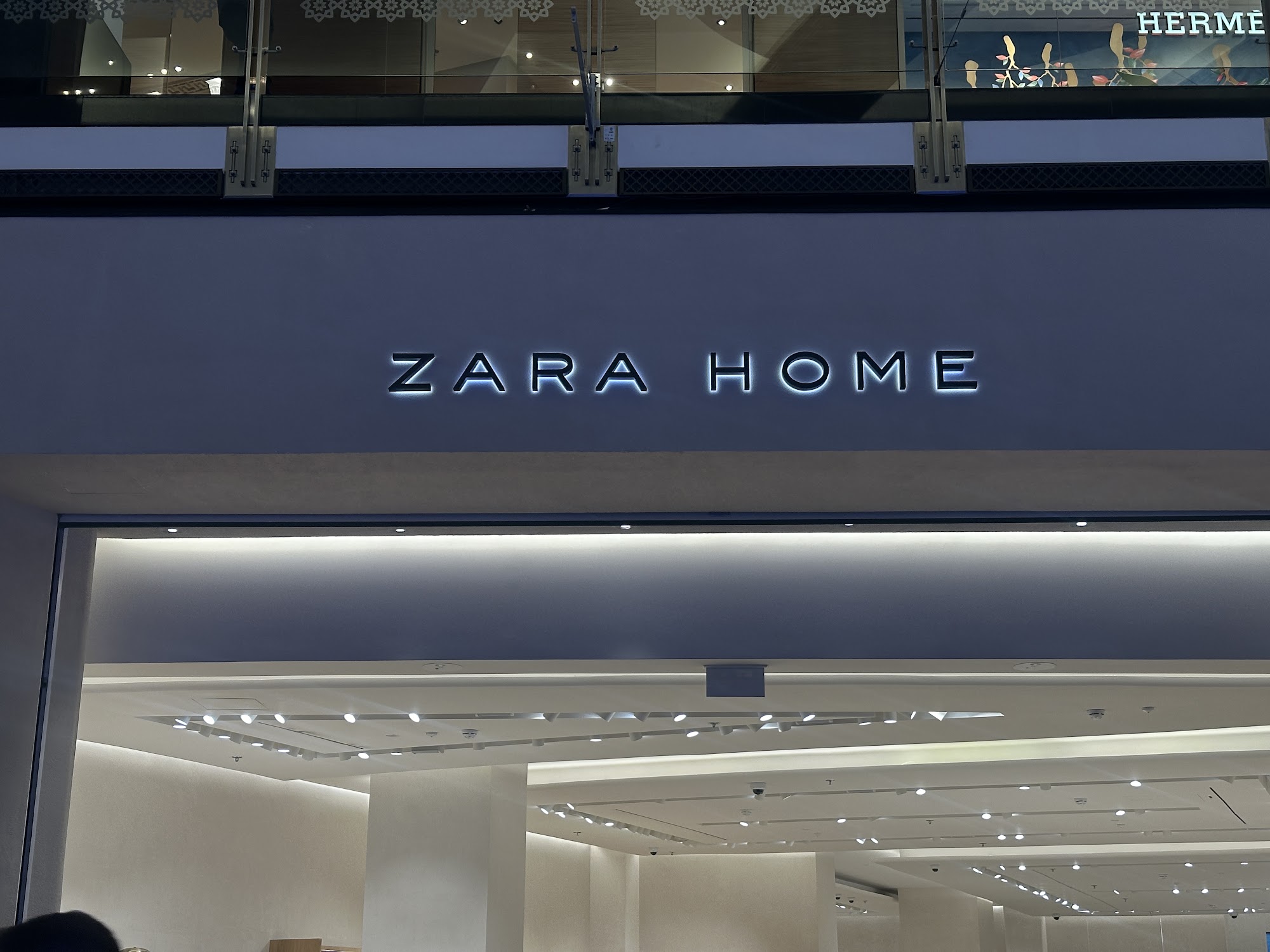
Retailers operating both a mall unit and a street-facing store often assume the same signage approach will transfer between the two. In practice, mall and street retail signage differ across nearly every dimension that matters for planning: who approves it, how it can be illuminated, how big it can be, what it’s made of, and when it can actually be installed.
Side-by-side comparison
| Factor | Mall signage | Street retail signage |
|---|---|---|
| Approval process | Landlord/mall management design approval (against Tenant Design Criteria) plus the relevant emirate authority permit | Authority permit only (e.g. DET and applicable OOH framework) — no landlord layer unless the unit sits within a managed development |
| Illumination rules | Set by the mall’s TDC — often restricts illumination type by unit category, sometimes limiting backlit acrylic in favour of reverse-lit or halo-lit letters | Set by authority/zone regulation — generally more latitude on illumination type, but subject to brightness limits near residential areas |
| Scale and projection limits | Fixed signage zone (height and width envelope) defined per unit in the lease/TDC — little room for negotiation | Governed by facade coverage percentage and projection-from-building-line rules, which can vary by street and zone |
| Typical materials | Often standardised or restricted by the mall to a narrower palette of approved materials and finishes for visual consistency across tenants | Greater material freedom, subject to structural, fire, and weather-durability requirements |
| Installation access and timing | Frequently restricted to approved night-work windows after mall closing hours, with security and access coordination required | Generally more flexible daytime access, though may need traffic management or municipality coordination for street-facing work |
| Bilingual text requirements | Usually still required per authority rules even inside a mall, though enforcement/verification may run through the landlord process | Directly enforced through the authority permit process |
Why the mall layer adds complexity, not just extra paperwork
The core difference is that mall signage answers to two separate decision-makers with sometimes different priorities: the landlord cares primarily about visual consistency and tenant mix within their property, while the authority cares about public safety, electrical compliance, and content/advertising regulation. A design that satisfies one doesn’t automatically satisfy the other, which is why mall submissions typically take longer and require more iteration than an equivalent street-facing sign. For the practical steps of assembling a mall submission package, see our guide on preparing a mall signage submission in Dubai, and for street-specific rules, see Dubai shopfront signage rules explained.
Practical implications for brands operating both formats
Brands running both mall and street locations typically need two signage variants of the same core identity — one compliant with each mall’s specific TDC, and one built for street-side authority rules — rather than a single universal design. Planning for this variance from the outset, rather than trying to force one design to fit both contexts, generally produces a cleaner result and fewer approval cycles.
Frequently Asked Questions
Is mall signage approval always slower than street signage approval?
Generally yes, because it involves an additional landlord review layer on top of the authority permit process, though the exact difference in timeline varies by mall and project complexity.
Can the same sign design be used in a mall and on a street storefront?
Sometimes the core brand elements can carry across, but scale, illumination method, and materials often need adjustment to comply with each context’s specific rules.
Do mall units still need authority permits, or does landlord approval cover it?
Both are typically required — landlord approval covers design and tenant-criteria compliance, while the authority permit covers regulatory compliance for illuminated or projecting signage.
Why do malls restrict signage materials more than street locations?
Malls generally aim for visual consistency across their tenant mix, so material and finish restrictions help maintain a coherent look across a shared retail environment in a way that isn’t a concern for standalone street units.
Plan signage for your mall and street locations
Tell us which formats you operate and we’ll map out what needs to differ between your mall and street signage. Contact us to plan your signage across formats.
Recommended Posts
LED Signage Retrofit: Repair or Replace Your Lighting
Should you repair, retrofit or replace an illuminated sign? An unlit or uneven sign does not always need complete replacement. It may need a local rep...

Signage Vendor Checklist for Architects and Consultants
A signage vendor checklist for architects and consultants Selecting a signage vendor requires more than comparing a finished photograph and a lump-sum...