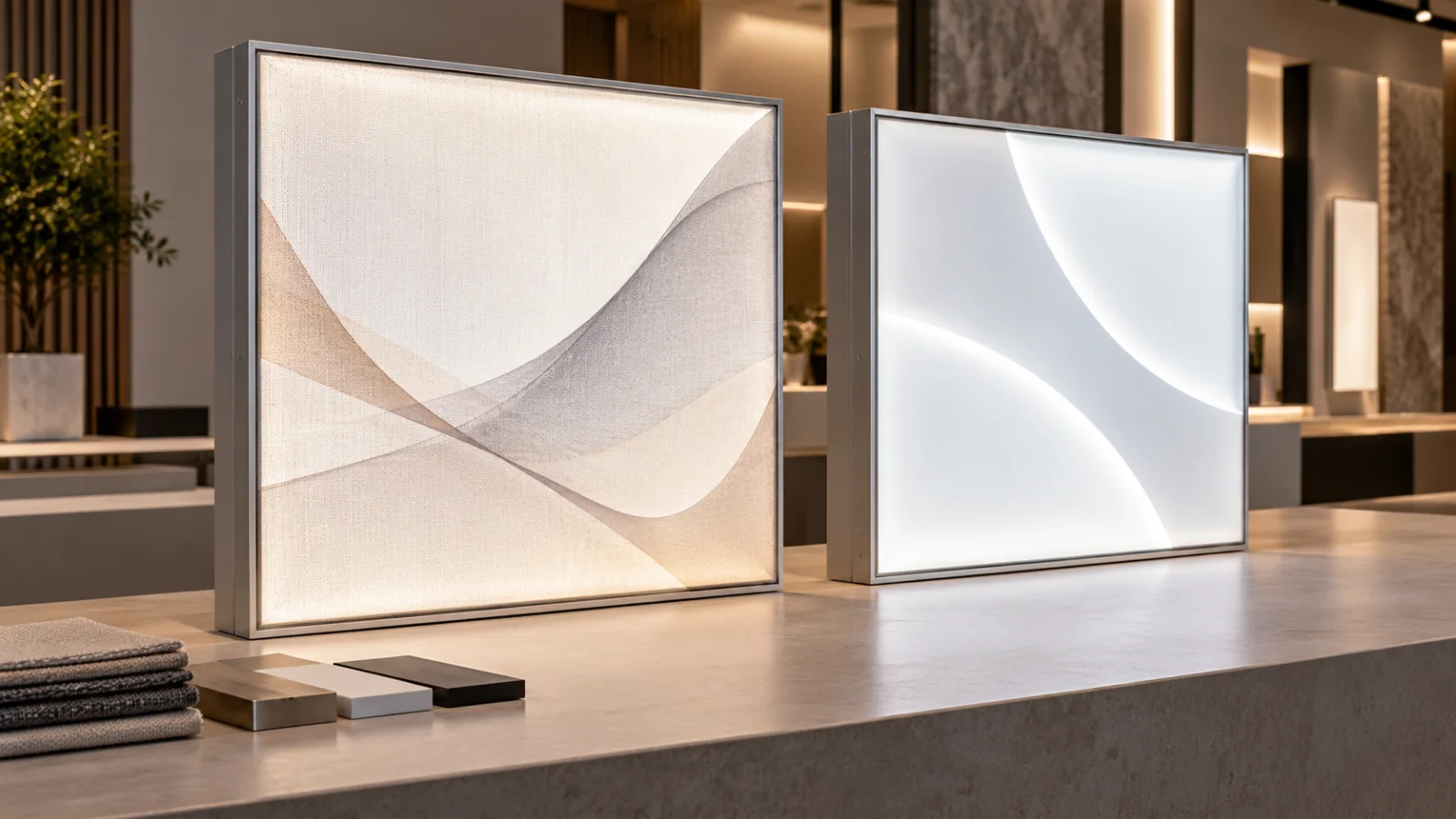
A decision guide for consultants and retail teams choosing between fabric (including SEG) and rigid acrylic lightbox faces.
Begin with the way the display will be used
The right lightbox depends on more than its appearance when new. Consider how often the graphic changes, who will change it and how the display can be reached. A campaign display and a permanent brand identity may need different approaches even when they occupy similar spaces.
Compare complete systems
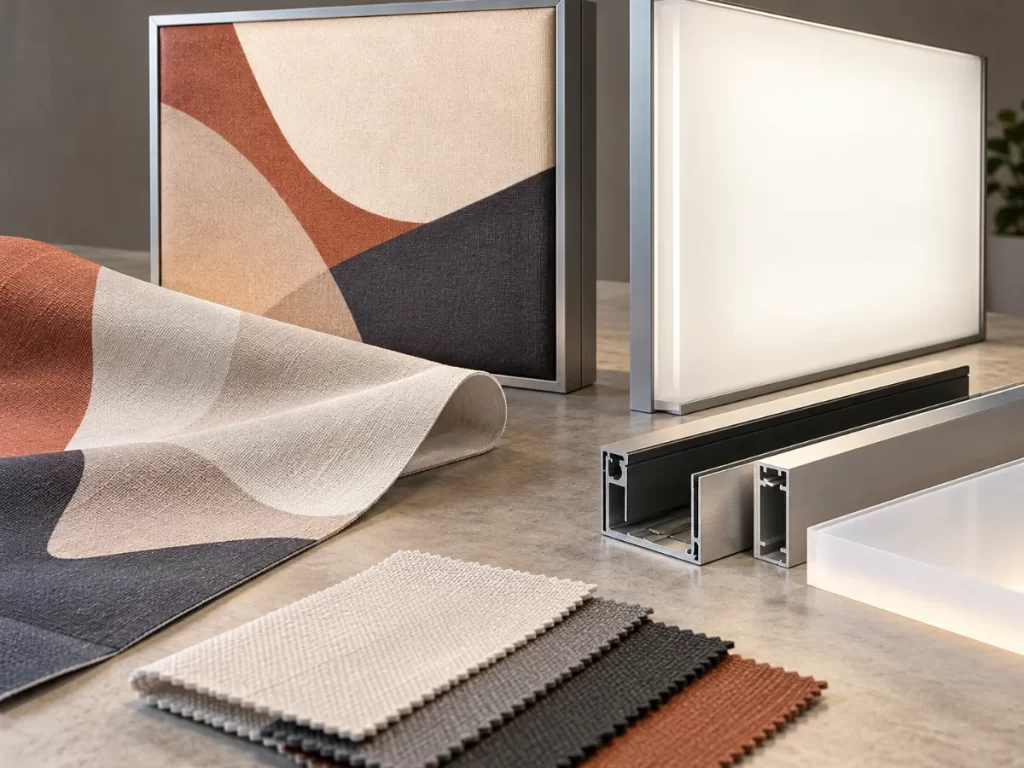
Review the frame, face, lighting and access method together. Ask how artwork is prepared, how an approved sample is recorded and what happens when the graphic or lighting needs attention. For outdoor or demanding locations, suitability must be supported by the actual system specification rather than a general claim about fabric or acrylic.
From our workshop
Use a project comparison
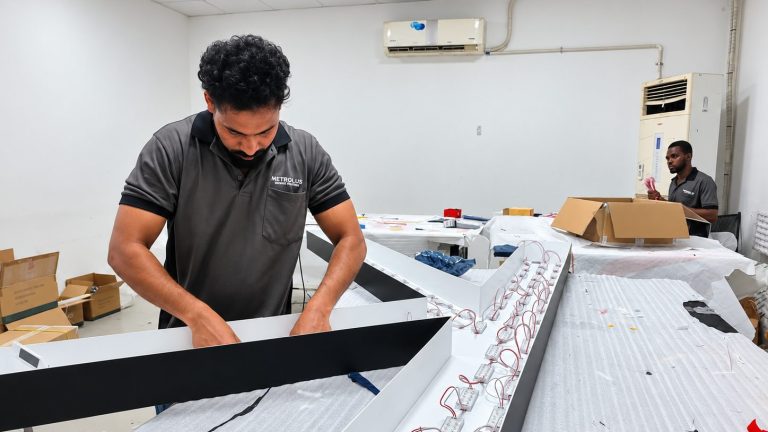
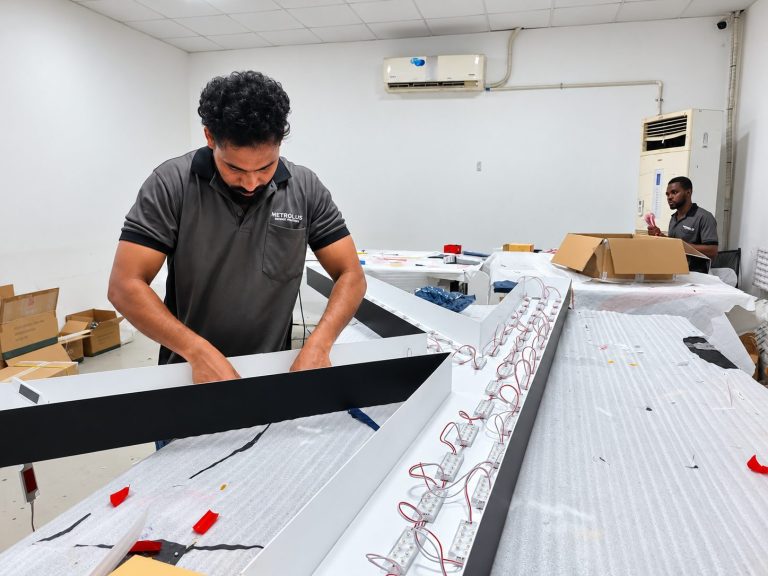
Create a short schedule covering dimensions, graphic-change frequency, mounting location, access, appearance and maintenance responsibilities. Compare proposals against that same schedule. Metroplus can review your site details and intended graphic use to identify the information needed for a suitable lightbox proposal. Where colour or uniformity is critical, agree a representative mock-up before production.
- Display dimensions
- Indoor or outdoor
- How often the graphic changes
- Mounting and access
- Artwork and sample requirements
When a digital LED cabinet is the better choice
Where content needs to change often or include motion, a digital LED cabinet or screen can replace a static lightbox, trading a fixed graphic for a content management system. This suits promotional displays, digital menu boards and locations where messaging changes daily rather than seasonally.
Choosing between fabric, acrylic and digital
- Large hanging or backdrop graphics with a seamless glow: fabric lightbox
- Compact storefront or wall signs needing a rigid, premium finish: acrylic lightbox
- Content that changes daily or needs motion or video: digital LED cabinet
- Frequent seasonal graphic changes: fabric lightbox
- Outdoor or high-traffic locations needing durability: acrylic lightbox or a sealed digital cabinet
| Fabric lightbox | Acrylic lightbox | LED cabinet (digital) | |
|---|---|---|---|
| Changing the graphic | Unzip and refit the fabric skin | Open the box and replace the printed face | Update content through the software |
| Best visual effect | Seamless, even glow across large graphics | Crisp, glossy shopfront finish | Motion, video and dynamic promotions |
| Upfront cost | Moderate | Moderate to low at small sizes | Highest: display hardware plus content system |
| Running cost | Low: LED backlight only | Low: LED backlight only | Higher: power, content management and servicing |
Installation and maintenance
Fabric lightboxes are the lightest of the three, which simplifies wall or ceiling suspension and reduces structural loading for hanging displays. Acrylic lightboxes are heavier for a given size and need secure wall or frame mounting. LED cabinets need a stable power supply, a network connection where content is managed remotely, and access for cleaning and servicing, which should be planned into the mounting position at design stage.
Questions
What should I send to compare lightbox options?
The display size, location, how often you expect to change the graphic, how the display is mounted and reached, and your artwork.
Is fabric or acrylic better outdoors?
It depends on the complete system. Suitability is confirmed against the actual frame, face and lighting specification for your site rather than the face material alone.
Which option is most cost-effective for a small storefront?
For a single storefront sign with infrequent graphic changes, an acrylic lightbox is usually the most cost-effective choice.
Can fabric graphics be changed without removing the lightbox?
Yes. The fabric skin is removed from the frame and replaced on site without taking the lightbox down, which suits brands running seasonal campaigns.
Do LED cabinets need a data connection?
Both options exist. A standalone cabinet can play scheduled content from local storage, while networked systems allow remote updates and monitoring across several locations.
Fabric or acrylic for a large backdrop or hanging display?
Fabric is generally the better choice for large formats because it gives a single seamless graphic and lower weight, while large acrylic faces need panel joins and heavier mounting.