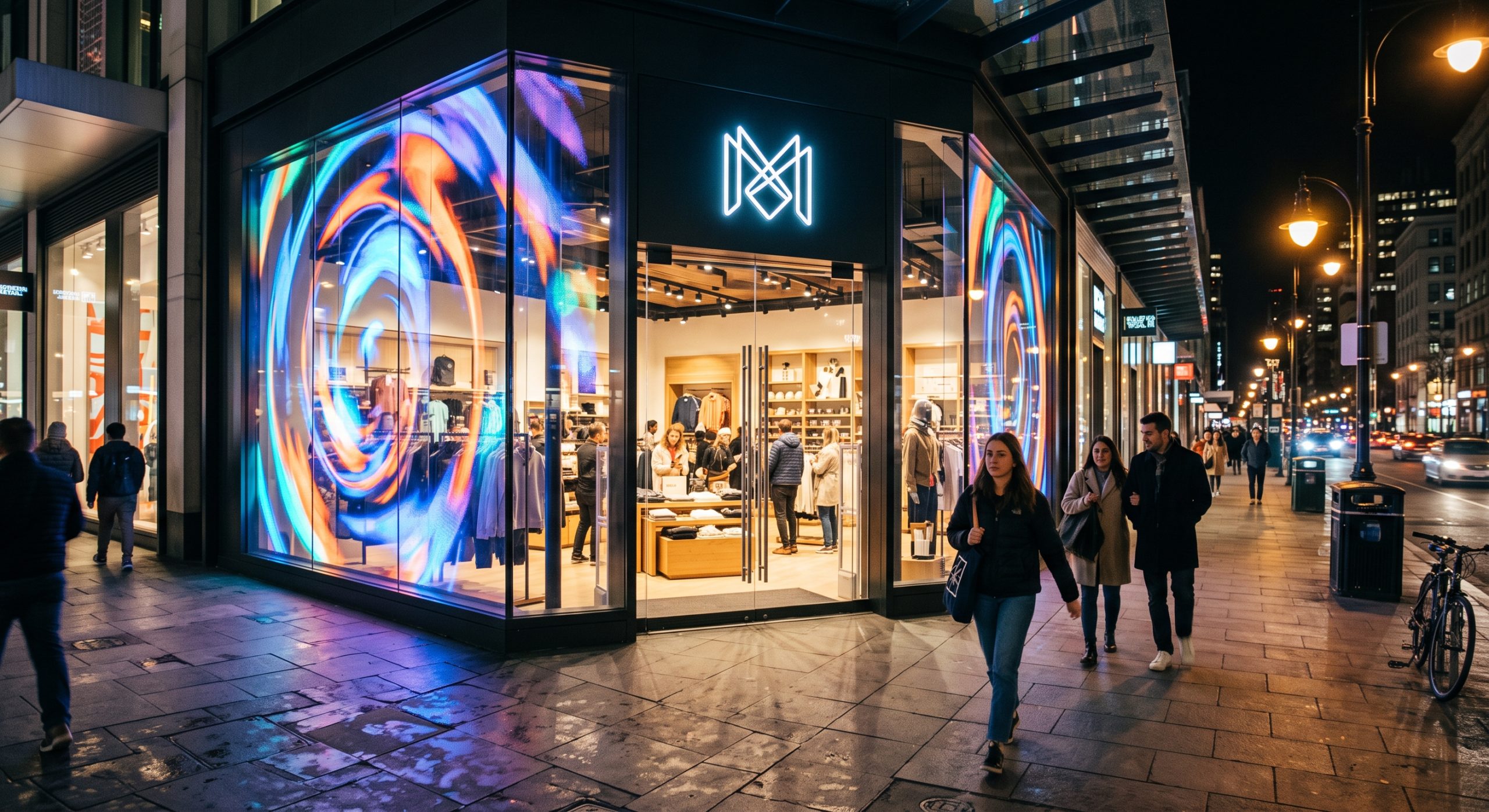
Transparent LED technology lets a storefront window carry moving digital content while still functioning as a window — passers-by see through it from outside, and staff and product displays remain visible from inside. It has become a genuine alternative to vinyl window graphics and standard LED cabinets for UAE retail frontages, particularly on Dubai’s high-footfall retail strips and mall storefronts. This is a technical look at how the technology works and where it does, and doesn’t, make sense.
How transparency is achieved
Transparent LED panels mount LED diodes on a thin, mostly-clear PCB strip or mesh structure rather than a solid opaque backing. The LEDs themselves are opaque points of light, but because they’re spaced across a mostly-open substrate (commonly 65–85% transparency depending on pixel pitch and product line), the human eye perceives the panel as see-through when unlit or displaying content, since most of the panel area is genuinely open air or clear film. The trade-off is direct: higher transparency means fewer LEDs per square metre, which lowers achievable resolution and daylight brightness. Denser, lower-transparency panels give sharper images but block more of the view through the glass.
Mounting methods
- Adhesive/suction mount on interior glass — lightest option, no structural fixing to the building, easiest to remove or reposition, common for leased retail units
- Frame-mounted between glass panes — used in double-glazed storefronts where the mesh sits within the cavity, protected from cleaning and weather
- Suspended from ceiling track behind glass — keeps the screen off the glass entirely, useful where the glass itself can’t take fixing loads
Transparent LED vs standard LED cabinet vs vinyl graphics
| Factor | Transparent LED | Standard LED cabinet | Vinyl window graphics |
|---|---|---|---|
| View through window preserved | Yes, partially (mesh/strip design) | No, screen is opaque | No, if full-coverage; yes if perforated vinyl |
| Content flexibility | Full video/dynamic content | Full video/dynamic content | Static, requires reprint to change |
| Daylight visibility | Good to strong, varies by transparency % | Strong (highest brightness options) | N/A, passive print |
| Upfront cost | Highest per m² | High | Low |
| Best fit | Premium storefronts wanting both display and visibility | Fascia signs, standalone displays, high-brightness needs | Budget-led, short campaign windows |
Where it makes sense in UAE retail
Transparent LED earns its premium price where the storefront itself is part of the brand experience — flagship stores on Dubai’s retail boulevards, mall units with double-height glass frontages, and luxury or F&B outlets that want to keep the interior visible (a working kitchen, a merchandised floor) while still running promotional or brand content. It’s a weaker fit for small units where the transparency trade-off leaves resolution too low to read at a glance, or for budget-conscious retailers who mainly need static seasonal graphics, where vinyl remains more cost-effective.
Practical considerations before specifying
Three questions determine whether transparent LED is the right call: What viewing distance will content be read from (higher transparency panels need larger text and simpler content to stay legible)? What’s the ambient daylight load on the facade (east/west-facing glass under UAE sun needs higher-brightness panel options)? And is structural glass load-bearing capacity confirmed for the chosen mounting method, particularly for frame-mounted-between-glass installs, which typically require coordination with the glazing contractor during fit-out rather than as a retrofit.
FAQ
Can transparent LED screens be seen clearly in direct UAE sunlight?
Yes, with sufficiently high-brightness panel specifications (typically 4,000–6,000 nits for outward-facing, sun-exposed glass); lower-brightness indoor-rated panels wash out in direct sun.
Do transparent LED screens need special glass?
No special glass type is required, but the mounting method should be agreed with the glazing supplier, especially for between-pane or suction-mounted installs on tempered or laminated glass.
How much of the view do these screens actually block?
Typically 15–35% of the surface area is occupied by LED strips/diodes, depending on the transparency rating and pixel pitch selected.
Are transparent LED screens harder to maintain than standard LED?
Cleaning is slightly more involved since both faces of the glass are relevant, but the LED modules themselves use the same driver and control technology as standard LED, so maintenance protocols are similar.
Is transparent LED suitable for outdoor facade use, not just storefronts?
Yes, higher-transparency mesh products are also used on building facades and atrium glazing, with IP-rated versions for direct outdoor exposure.
Metroplus specifies and installs transparent LED systems for UAE retail storefronts, matched to glass type, brightness needs and mounting method. Contact us to review options for your frontage.
Recommended Posts
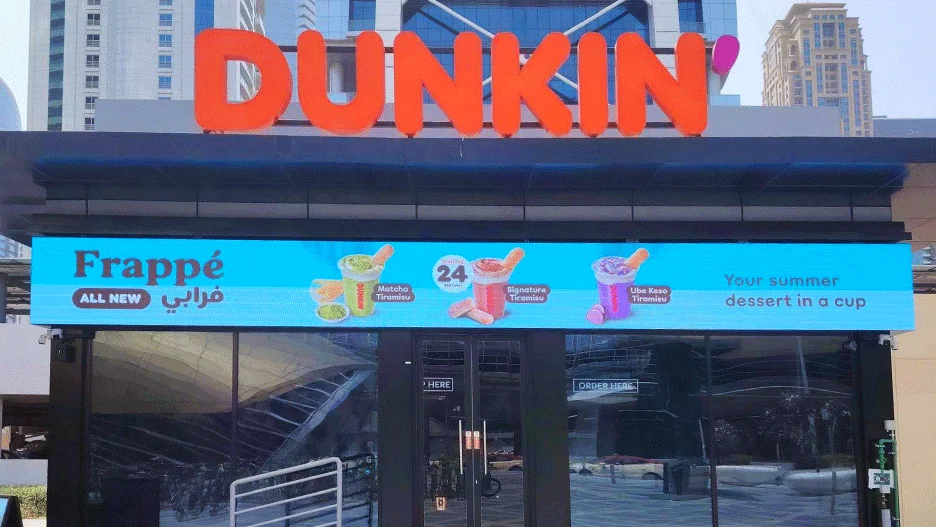
LED Signage Retrofit: Repair or Replace Your Lighting
Should you repair, retrofit or replace an illuminated sign? An unlit or uneven sign does not always need complete replacement. It may need a local rep...

Signage Vendor Checklist for Architects and Consultants
A signage vendor checklist for architects and consultants Selecting a signage vendor requires more than comparing a finished photograph and a lump-sum...