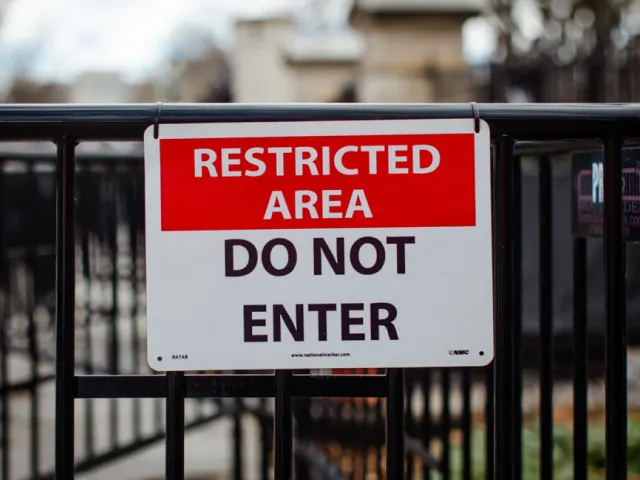
Evacuation and emergency signage is one of the few sign categories where getting the specification wrong is not just a design or cost problem — it is a Civil Defence inspection failure. Photoluminescent exit signs, fire-rated materials, and precise placement rules are non-negotiable technical requirements, not stylistic choices. This guide covers what UAE Civil Defence and fire safety codes typically expect from evacuation and safety signage.
Photoluminescent vs Electrically Powered Exit Signage
UAE fire codes generally require exit and directional evacuation signage to remain visible during a power outage, which is achieved one of two ways: photoluminescent (glow-in-the-dark) signage that charges under ambient light and glows for a specified duration once lighting fails, or electrically powered signage on a backup/emergency power circuit. Photoluminescent signage has become the more common specification on new UAE developments because it requires no wiring, no battery replacement, and keeps working even if backup power fails — but it must meet minimum luminance and charge-time standards to be code-compliant, not just any glow-in-the-dark material.
Fire-Rated Material Requirements
Evacuation signage materials themselves are subject to fire performance requirements — the sign must not contribute significantly to fire spread or smoke generation in the escape route it is marking. This generally rules out uncertified plastics and requires photoluminescent film and substrates rated to recognised fire performance standards. Always confirm the specific fire rating certificate for the exact product being installed, since not all photoluminescent products on the market carry the same certification, and Civil Defence inspectors check for this documentation.
Core Placement Standards
- Exit signage above every designated exit door along an escape route, clearly visible from within the space it serves
- Directional arrows at decision points — corridor junctions, stairwell entries, and anywhere the escape route is not immediately obvious
- Consistent mounting height for wall-mounted directional signage, supplemented in some building types by low-level photoluminescent strips near floor level that remain visible below smoke layers
- Stairwell identification signage at every floor level, indicating floor number and whether the stairwell continues to street level or a refuge floor
- Assembly point signage at the final exterior gathering location, visible from the building’s exit routes
Signage Types Covered Under Safety and Evacuation Requirements
| Sign Type | Typical Requirement |
|---|---|
| Exit signs | Photoluminescent or electrically powered, positioned above every exit along the escape route |
| Directional/arrow signs | At every corridor junction or decision point on the escape route |
| Fire equipment identification | Marking extinguisher, hose reel, and fire panel locations clearly and consistently |
| Stairwell floor identification | At every landing, indicating floor level and stair continuation |
| Assembly point signage | At the designated final exterior gathering area |
Coordinating With Civil Defence Approval
Evacuation signage is typically reviewed as part of a building’s overall fire and life safety submission to Civil Defence, alongside fire alarm, sprinkler, and emergency lighting systems — it is not usually approved as a standalone signage permit the way a shopfront sign is. This means evacuation signage design should be coordinated with your fire safety consultant from the start, not treated as a finishing-stage add-on once the rest of the fit-out is complete.
Frequently Asked Questions
Is photoluminescent exit signage sufficient on its own, or is a powered sign also needed?
This depends on the building’s fire safety strategy and the requirements confirmed by the project’s fire safety consultant and Civil Defence — some buildings use photoluminescent signage as the primary or sole solution, others combine it with powered signage on emergency circuits.
How often does photoluminescent signage need to be replaced?
Photoluminescent material degrades gradually with UV exposure and age; manufacturers typically specify a service life, and periodic testing of glow performance is good practice as part of a building’s fire safety maintenance programme.
Can evacuation signage be combined with general wayfinding?
Directional wayfinding and life-safety evacuation signage can be visually coordinated, but life-safety signage must always remain clearly distinguishable and meet its own placement and material standards — it should never be diluted into general branding or wayfinding aesthetics.
Who approves evacuation signage in a UAE building?
It is reviewed as part of the building’s fire and life safety submission to the local Civil Defence authority, typically coordinated by the project’s fire safety consultant alongside the wider fire protection system design.
If you are specifying or upgrading evacuation and safety signage for a UAE building, get in touch — we fabricate to certified fire-rated and photoluminescent standards and can work directly with your fire safety consultant on placement and specification.
Recommended Posts

LED Signage Retrofit: Repair or Replace Your Lighting
Should you repair, retrofit or replace an illuminated sign? An unlit or uneven sign does not always need complete replacement. It may need a local rep...

Signage Vendor Checklist for Architects and Consultants
A signage vendor checklist for architects and consultants Selecting a signage vendor requires more than comparing a finished photograph and a lump-sum...