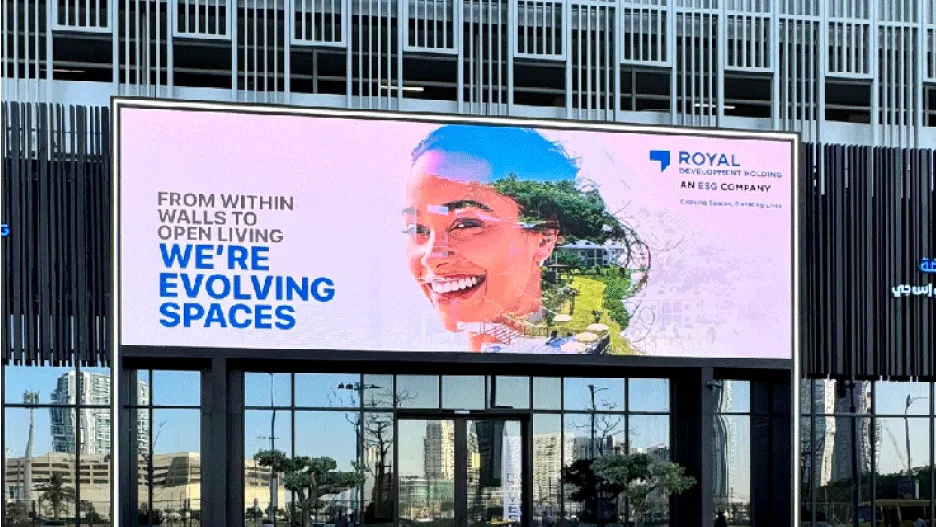
A retail media network (RMN) turns a retailer’s own digital assets — website, app, and physical screens — into an advertising channel that brands pay to access. Globally, retail media has grown into one of the fastest-growing ad categories because it sits at the point of purchase and can be tied to actual sales data. In-store screens are the physical anchor of this model, and UAE malls and large-format retailers are increasingly treating their screen networks as a revenue line, not just a marketing cost.
How an in-store screen becomes an ad channel
The mechanics are straightforward once the infrastructure exists. A retailer or mall operator installs a content management system (CMS) across its LED or LCD screen estate — entrance displays, aisle-end screens, digital shelf edges, checkout screens — and sells inventory on those screens in fixed slots or rotations. Brands (often the retailer’s own suppliers, e.g. an FMCG brand wanting shelf-adjacent visibility) buy that inventory the way they would buy any media placement: by impressions, dayparts, or share of voice.
What makes retail media distinct from ordinary out-of-home advertising is the closed loop: the retailer can often match screen exposure to point-of-sale data for the same shopper visit, giving advertisers a measurable link between an ad and a purchase that traditional billboards cannot offer.
Where UAE malls and retailers fit
Large UAE malls already operate extensive common-area LED networks; the retail media shift is about layering a sales function onto that existing hardware rather than adding new screens. Supermarket and hypermarket chains are the other natural fit, given high footfall and direct adjacency to the product being advertised. Typical inventory types in this market include:
- Mall common-area LED walls and column wraps sold to non-tenant brand advertisers
- In-store aisle and category screens sold to CPG suppliers
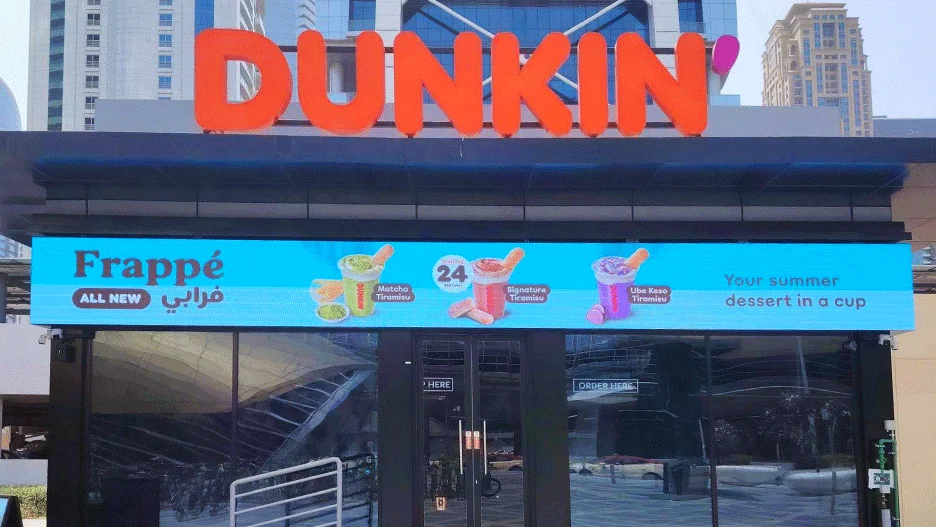
- Checkout and queue-line screens for last-look impulse advertising
- Digital window displays facing high-footfall corridors
What’s needed technically
Turning existing signage into sellable media inventory requires more than a screen and a media player. A functioning RMN needs:
| Component | Purpose |
|---|---|
| Centralised CMS with scheduling rules | Guarantee contracted play counts per advertiser, avoid double-booking slots |
| Proof-of-play reporting | Verify to the advertiser that content actually played, when and how often |
| Audience measurement (camera-based or footfall counters) | Support impression estimates and pricing by reach |
| Content approval workflow | Screen third-party ad creative for brand safety and technical spec compliance before it goes live |
| Billing/reporting integration | Turn play logs into invoiceable reports for media buyers |
Retailers evaluating this shift should budget for the software and measurement layer as a distinct line item from the display hardware itself — it is usually the software, not the screens, that determines whether an RMN can actually be sold to brands with confidence.
Realistic revenue expectations
Retail media works best at scale: a single-store screen network rarely justifies the sales and operations overhead of running an ad business. It becomes viable once a retailer has enough locations and footfall that a media sales team (in-house or via a specialist partner) can sell inventory in a structured way, similar to how a publisher sells website ad space. Multi-site UAE retailers with 10+ locations are the segment where this typically starts to make commercial sense.
FAQ
Is retail media the same as programmatic DOOH?
They overlap but aren’t identical. Retail media specifically refers to a retailer monetising its own screens/app/site to brands (often its own suppliers); programmatic DOOH is the buying mechanism that can be used to sell that inventory automatically, alongside direct-sold deals.
Do we need new screens to start a retail media network?
Not necessarily. Existing digital signage can often be repurposed if it has (or can be upgraded with) a CMS capable of slot-based scheduling, proof-of-play logging and content approval.
How is screen advertising priced in retail media?
Common models include cost-per-thousand-impressions (CPM) based on estimated audience, flat-rate slot bookings by daypart, or share-of-voice packages across a defined screen network.
Can a single mall or store run its own retail media programme?
Yes, at a smaller scale, usually through direct-sold sponsorships rather than a full programmatic setup, which needs more volume to be worthwhile.
What’s the biggest technical blocker retailers hit?
Fragmented hardware and media players from different signage rollouts over the years, which makes centralised scheduling and reporting difficult until the network is consolidated onto one CMS.
Metroplus designs and installs the LED and LCD screen infrastructure that retail media networks run on, from mall common-area walls to in-store digital displays. Contact us to scope a screen network built for future monetisation.
Recommended Posts
LED Signage Retrofit: Repair or Replace Your Lighting
Should you repair, retrofit or replace an illuminated sign? An unlit or uneven sign does not always need complete replacement. It may need a local rep...

Signage Vendor Checklist for Architects and Consultants
A signage vendor checklist for architects and consultants Selecting a signage vendor requires more than comparing a finished photograph and a lump-sum...