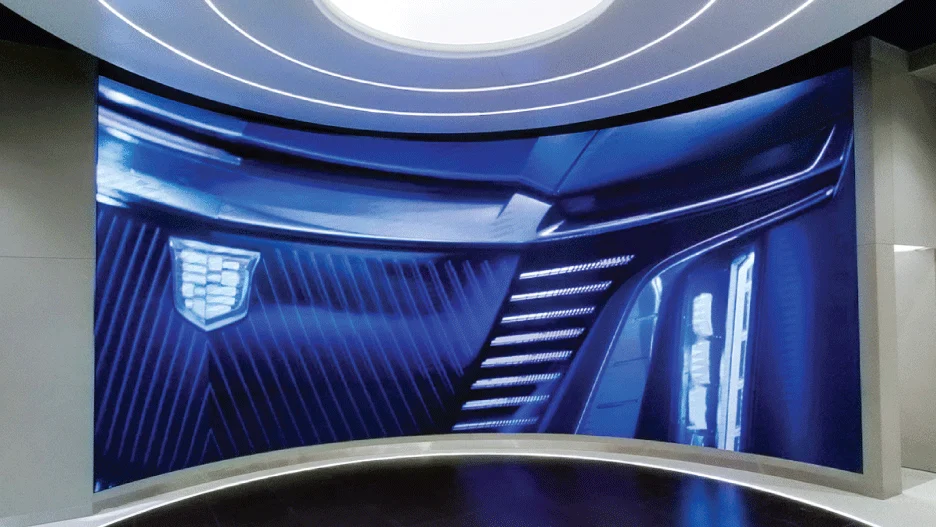
Programmatic digital-out-of-home (DOOH) applies the automated buying mechanics of online display advertising to physical screens — malls, retail windows, roadside LED, and building facades. Instead of an advertiser negotiating a fixed booking directly with a screen owner months in advance, programmatic DOOH lets that inventory be bought and sold through an auction-based exchange, in near real time. Dubai’s dense concentration of premium outdoor and mall screens has made it one of the more active programmatic DOOH markets in the region.
The buying chain, plainly explained
Four parties sit in a typical programmatic DOOH transaction:
- Screen owner / media owner — the mall, building, or roadside asset operator who owns the physical LED or LCD network
- Supply-side platform (SSP) — software that lists the screen owner’s available slots as sellable inventory, applying pricing floors and availability rules
- Demand-side platform (DSP) — software an advertiser or agency uses to bid on inventory across many SSPs at once, targeting by location, screen type, audience data, weather, or time of day
- Ad server / CMS on-site — the system that actually receives the winning creative and plays it on the physical screen, then reports back proof-of-play
When an advertiser sets a campaign live in a DSP, the system evaluates available slots across connected SSPs, bids according to the campaign’s rules, and if it wins, pushes creative to the screen’s CMS for the booked slot — all without a human negotiating that specific spot.
Why this matters for Dubai’s screen owners
For an owner of a mall LED wall, building facade screen, or retail window network, connecting to programmatic exchanges opens up demand beyond direct local sales relationships — including regional and international agencies buying UAE inventory as part of wider Gulf or MENA campaigns. It doesn’t replace direct-sold advertising (large brand takeovers and sponsorships are still usually sold directly, at a premium), but it fills remnant inventory that would otherwise go unsold, and it automates a sales function that would otherwise need a larger commercial team.
Technical requirements to participate
| Requirement | Why it’s needed |
|---|---|
| SSP-compatible CMS or media player | Enables the screen to receive and log programmatically-booked creative automatically |
| Reliable connectivity | Slots are booked and delivered close to play time; offline screens can’t participate reliably |
| Defined ad-safe zones in creative templates | Third-party creative must fit the screen’s actual resolution and aspect ratio without manual resizing |
| Proof-of-play and impression reporting | Programmatic buyers expect verifiable delivery data, not just a play-out promise |
| Content moderation rules | Automated bidding means creative arrives without a human pre-screening every ad; brand-safety filters need to be configured in the SSP |
What programmatic DOOH doesn’t solve
It doesn’t fix a poorly located or low-traffic screen — programmatic buyers still bid based on audience and location quality, so weak inventory earns weak rates regardless of automation. It also doesn’t replace the need for a physically reliable, well-maintained screen network; automated demand still expects the uptime and image quality a direct-sold advertiser would expect.
Getting a screen network programmatic-ready
Most of the work happens at the CMS and connectivity layer rather than the display hardware. When Metroplus specifies an LED or LCD network for a client intending to sell inventory programmatically, the design accounts for stable networking, a CMS with SSP integration support, and content templates sized to the panel’s actual pixel pitch and resolution from day one, rather than retrofitting this after installation.
FAQ
Is programmatic DOOH only for large roadside billboards?
No. Mall common-area screens, retail window displays, and building facade LED are all commonly sold programmatically in Dubai, alongside traditional roadside assets.
Does programmatic buying mean lower ad rates?
Not necessarily. Auction dynamics mean premium, high-traffic slots can command strong rates; programmatic mainly changes how a deal is transacted, not the underlying value of the audience.
Can a screen be sold both directly and programmatically?
Yes, this is the norm. Owners typically reserve prime slots and takeovers for direct sales and route remnant or off-peak inventory through programmatic exchanges.
What connectivity does a screen need for programmatic delivery?
A stable, reasonably low-latency internet connection at the display site; most programmatic platforms deliver creative shortly before the booked play window.
Do older LED screens need to be replaced to go programmatic?
Often not, if the existing media player or CMS supports SSP integration or can be upgraded; the display panel itself is usually unaffected.
Metroplus designs and installs LED and LCD screen networks across Dubai with the connectivity and CMS integration needed for both direct and programmatic sales. Contact us to plan a screen network built for either model.
Recommended Posts
LED Signage Retrofit: Repair or Replace Your Lighting
Should you repair, retrofit or replace an illuminated sign? An unlit or uneven sign does not always need complete replacement. It may need a local rep...

Signage Vendor Checklist for Architects and Consultants
A signage vendor checklist for architects and consultants Selecting a signage vendor requires more than comparing a finished photograph and a lump-sum...