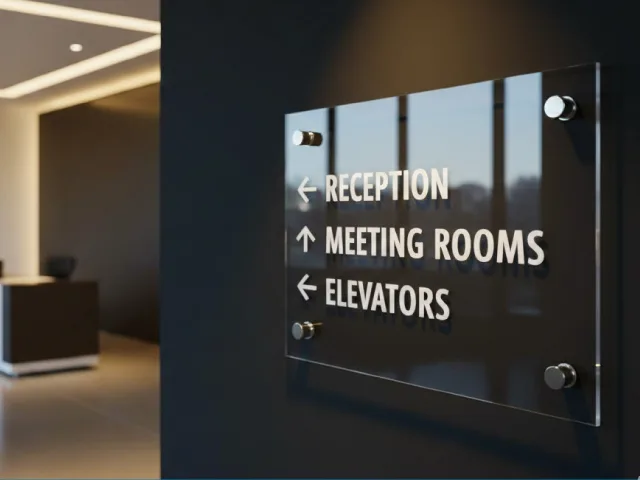
Hotel wayfinding has a dual mandate that most other building types don’t share: it has to work functionally, guiding guests confidently from arrival to room to amenities, while also reinforcing the brand experience the hotel is selling. A wayfinding system that feels like an airport terminal undermines a five-star arrival experience just as much as a confusing one does. See our Hotel Wayfinding Signage page for examples of how this comes together.
Guest Experience Comes First
Unlike a hospital or transit hub, hotel guests are rarely under time pressure or stress, but they are forming an impression of the property with every interaction, including how easily they find their room, the pool, or the restaurant. Wayfinding that requires asking staff for directions repeatedly signals a design failure, however subtle, in an experience the hotel is charging a premium for. The goal is confident, low-effort navigation that guests barely notice because it simply works.
Brand-Aligned Signage Design
Hotel wayfinding signage is one of the most visible, continuous expressions of brand identity in the building — guests encounter it dozens of times during a stay, far more than most other branded touchpoints. Material, typography, lighting and finish choices need to align tightly with the hotel’s brand standards (many international hotel groups issue detailed signage brand guideline documents), while still meeting the functional legibility requirements of clear wayfinding. This often means custom fabrication rather than off-the-shelf sign systems, particularly for luxury and boutique properties.
Multi-Building Resort Navigation
Large resorts spanning multiple buildings, villas, beach access points and recreational facilities present a materially harder wayfinding problem than a single hotel tower. Outdoor wayfinding needs to account for longer sightlines, exterior lighting for evening navigation, weather-resistant materials for UAE heat and humidity, and often golf-cart or buggy-scale signage in addition to pedestrian-scale signage. A resort wayfinding strategy typically needs a site-wide directory system at key hubs (lobby, beach access, spa) supplemented by simpler directional markers along paths.
Back-of-House vs Guest-Facing Signage
Hotels operate two parallel wayfinding systems: the polished, brand-aligned signage guests see, and a separate, purely functional system for staff circulation, service corridors, loading docks and back-of-house areas. These should be visually and materially distinct — back-of-house signage prioritises clarity and durability over brand aesthetics, and importantly, guests should never inadvertently find themselves following back-of-house signage into a service area. Clear separation of guest and staff routes at the design stage prevents this.
Key Wayfinding Zones in a Hotel
| Zone | Wayfinding Priority |
|---|---|
| Arrival / porte-cochere | Immediate brand impression, clear entrance identification |
| Lobby and lift lobbies | Confident routing to rooms, floor identification |
| Guest corridors | Room numbering clarity, consistent brand finish |
| Amenities (pool, spa, restaurants) | Clear directional signage from all major guest routes |
| Resort grounds / multi-building | Site-wide directory plus path-level directional markers |
| Back-of-house | Functional clarity, durability, visually separated from guest signage |
Bilingual and International Guest Considerations
UAE hotels host a highly international guest base, and wayfinding benefits from clear iconography and, where relevant, Arabic/English bilingual signage in public areas, consistent with broader UAE wayfinding practice — see our bilingual wayfinding signage guide for the detail on nomenclature and layout.
Frequently Asked Questions
How is hotel wayfinding different from mall or hospital wayfinding?
Hotel wayfinding places a much greater weight on brand experience alongside function, since guests are forming a premium brand impression rather than simply completing a task under time pressure.
Should resort wayfinding be different for multi-building properties?
Yes, multi-building resorts need a site-wide directory system plus path-level directional signage, accounting for outdoor sightlines, lighting and often buggy or golf-cart circulation.
Why separate back-of-house and guest-facing signage?
Guest-facing signage carries brand design standards guests expect; back-of-house signage prioritises functional clarity and durability, and the two should be visually distinct so guests don’t wander into service areas.
Do hotel brand guidelines usually cover signage?
Many international hotel groups issue detailed signage brand standards documents covering material, typography and finish that need to be followed alongside functional wayfinding requirements.
Planning wayfinding for a new hotel or resort in the UAE? Contact Metroplus to align your brand standards with a functional, guest-first wayfinding system.
Recommended Posts
LED Signage Retrofit: Repair or Replace Your Lighting
Should you repair, retrofit or replace an illuminated sign? An unlit or uneven sign does not always need complete replacement. It may need a local rep...

Signage Vendor Checklist for Architects and Consultants
A signage vendor checklist for architects and consultants Selecting a signage vendor requires more than comparing a finished photograph and a lump-sum...