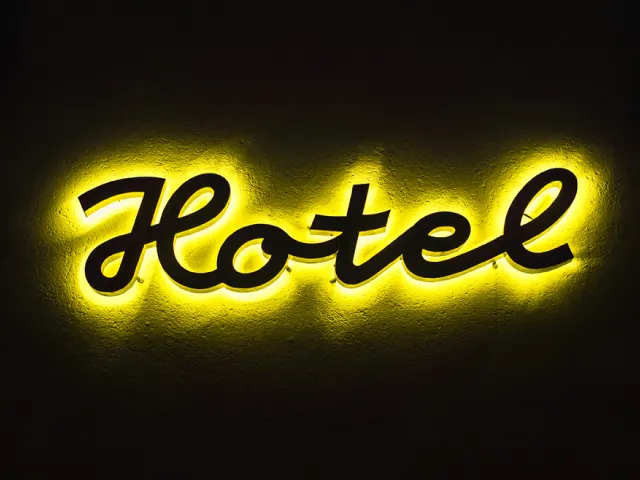
Illuminated channel letters and dimensional signage can be lit three fundamentally different ways — front-lit, backlit (halo-reversed) or halo-lit — and the choice changes the entire visual character of a sign, not just its brightness. Each approach also has different fabrication requirements and cost implications. Here’s how they differ and where each is typically used.
Front-Lit Signage
In a front-lit letter, LEDs sit behind a translucent acrylic face inside the letter body, so light shines directly outward through the face of the letter itself. This produces a bright, solid, evenly lit letter face that reads clearly day and night and is the most common approach for retail storefront branding, mall signage and corporate identity signs where maximum daytime and night-time legibility matters most. Front-lit letters are relatively straightforward to fabricate and the most cost-effective of the three illuminated approaches.
Backlit (Halo-Lit) Signage
A backlit letter has an opaque face and LEDs mounted at the back of the letter, facing a wall or mounting surface, so light spills out around the letter’s edges creating a soft halo or glow silhouette against the mounting surface rather than lighting the letter face itself. This produces a premium, ambient, almost architectural look that is widely used in corporate lobbies, hotel signage and upscale office receptions where the brand mark itself is meant to read as a refined design element rather than a bright advertisement. It generally requires a slightly greater standoff from the wall and more precise fabrication to achieve an even halo.
Front-and-Backlit (Combination)
Some premium installations combine both: a translucent face for front illumination plus a halo glow from the back, giving a lit letter face and a surrounding glow simultaneously. This is more complex and costly to fabricate but delivers the strongest visual impact, and is typically reserved for flagship stores, hotel porte-cochere signage and high-visibility corporate identity installations.
Visual Comparison
| Front-Lit | Backlit / Halo-Lit | Combination | |
|---|---|---|---|
| Visual effect | Bright, solid, high-contrast letter face | Soft ambient glow/silhouette around the letter | Both effects together |
| Typical use | Retail branding, storefronts, mall signage | Corporate lobbies, hotel signage, architectural branding | Flagship stores, premium hospitality entrances |
| Daytime legibility | Excellent | Moderate (relies on ambient contrast) | Excellent |
| Fabrication complexity | Lower | Moderate-higher (standoff, even glow) | Highest |
| Relative cost | Lowest | Moderate | Highest |
Matching Illumination to Brand Positioning
Front-lit signage communicates visibility and directness — it’s built to be seen and read quickly, which suits high-street retail and wayfinding-heavy environments. Halo-lit signage communicates restraint and quality — the glow is felt more than read, which is why it dominates five-star hospitality lobbies and premium corporate offices where subtlety signals brand confidence rather than shouting for attention. Choosing between them is as much a brand decision as a technical one.
Fabrication Considerations
Backlit letters require a return depth and standoff distance from the wall calculated to diffuse the LED points into an even glow rather than visible hotspots — get this wrong and the halo looks patchy rather than smooth. Front-lit letters need a consistent, correctly diffused acrylic face thickness and LED spacing to avoid visible “hotspotting” through the face itself. Both approaches also need weatherproof LED modules and drivers if used outdoors in UAE heat, since driver failure from heat is one of the most common illuminated-sign maintenance issues we see.
Frequently Asked Questions
Which is more expensive, front-lit or backlit signage?
Backlit (halo) signage is typically somewhat more expensive than front-lit due to the standoff mounting and more demanding fabrication tolerances needed for an even glow.
Is halo-lit signage as legible as front-lit during the day?
Not usually to the same degree — halo lighting relies on contrast against the mounting surface and reads best at dusk and at night, or in shaded interior settings, rather than in full daylight.
Can I combine front-lit and halo-lit on the same sign?
Yes, this is common for flagship and premium installations and delivers the strongest visual presence, at a higher fabrication cost.
Which option suits a retail storefront best?
Front-lit is generally preferred for retail storefronts because it prioritises maximum legibility and visibility from a distance, both day and night.
Deciding on illumination for an upcoming sign or facade brand mark? Contact Metroplus and we’ll recommend the right lighting approach for your space and brand.
Recommended Posts
LED Signage Retrofit: Repair or Replace Your Lighting
Should you repair, retrofit or replace an illuminated sign? An unlit or uneven sign does not always need complete replacement. It may need a local rep...

Signage Vendor Checklist for Architects and Consultants
A signage vendor checklist for architects and consultants Selecting a signage vendor requires more than comparing a finished photograph and a lump-sum...