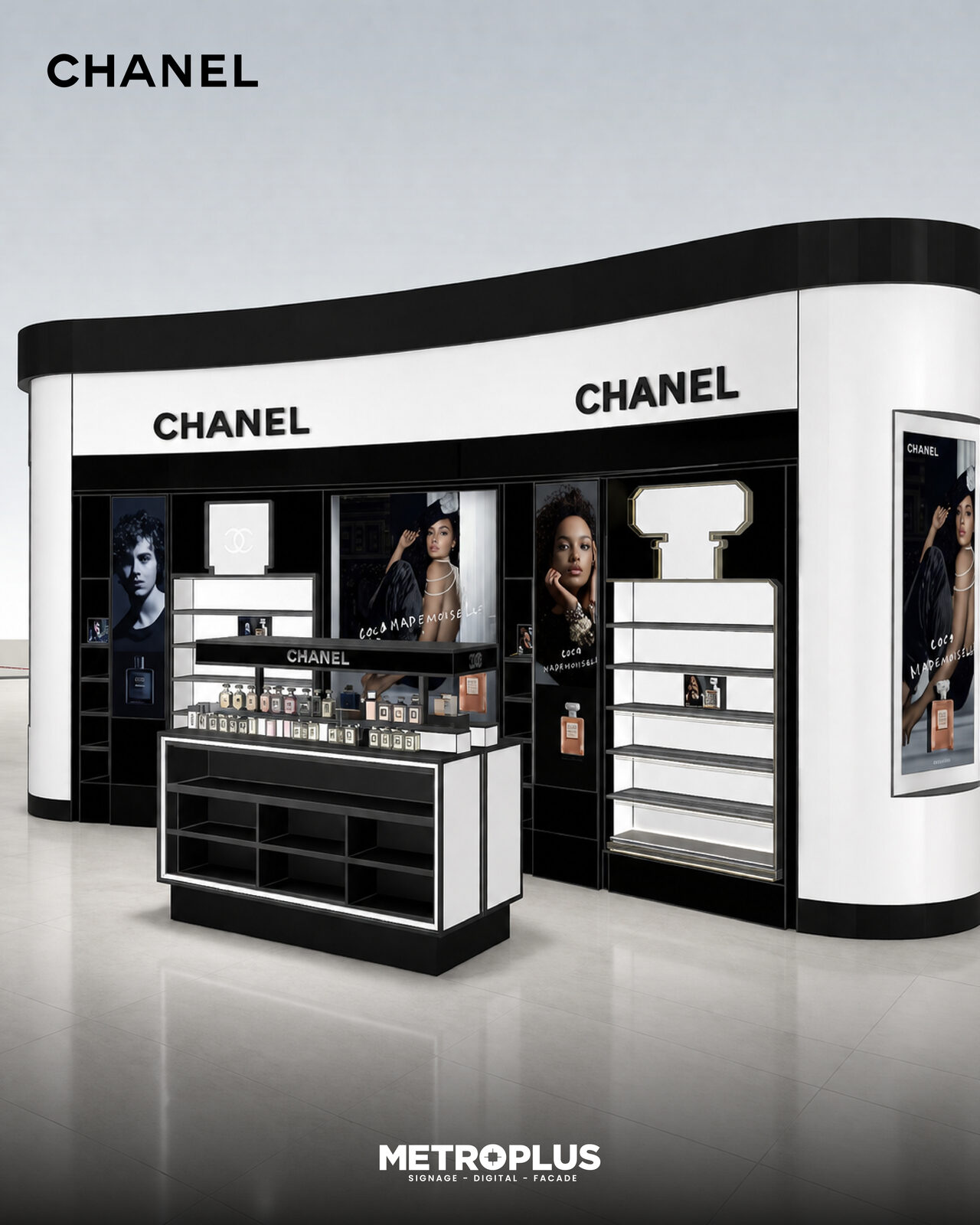
A retail display stand has one job under a lot of constraints: hold and present product in a way that reinforces the brand, survives daily handling by customers and staff, and fits within a footprint that store planning has already committed to. Getting this right at the design stage avoids the common outcome of a stand that looks good in the showroom render and falls apart after a few months on the floor.
The display stand is often the closest physical brand touchpoint a customer interacts with directly, more than signage or store fixtures they simply walk past. Material choice, colour, finish and proportions should draw from the same brand guideline that governs signage and retail interiors — a mismatched finish (the wrong metal tone, an inconsistent laminate colour) undermines brand presentation even if the stand’s function is otherwise sound. For multi-brand retailers, a modular stand system that adapts a consistent base structure with swappable branded graphics panels is often more practical than a fully bespoke stand per campaign.
| Material | Typical use | Considerations |
|---|---|---|
| Powder-coated steel/aluminium frame | Structural base for most freestanding stands | Durable, supports heavier product loads, wide colour/finish range |
| Acrylic panels and shelving | Premium product display, cosmetics, accessories | Clean, modern look; scratches show more visibly over time than metal |
| MDF/laminate | Cost-effective retail fixtures, promotional stands | Lower cost, less durable under heavy repeated handling, generally not for high-traffic permanent installs |
| Corrugated/cardboard | Short-term promotional and launch displays | Lowest cost, intended for weeks not years, easy to ship flat-packed |
| Wood veneer/timber | Premium and hospitality-adjacent retail | Warm aesthetic, needs a protective finish for durability under handling |
Retail handling is rougher on furniture than most design briefs assume — stands get leaned on, bumped by trolleys, and loaded beyond their intended weight by well-meaning staff restocking product. Practical durability design includes specifying load ratings for shelving that account for realistic worst-case product weight, rounding or protecting exposed edges and corners that will be repeatedly brushed against, and choosing fasteners and joints that don’t loosen under repeated vibration or minor impact over months of use.
Retail environments change more often than the physical fixtures do — new campaigns, new product ranges, reconfigured floor plans. A stand designed with modularity in mind — interchangeable graphic panels, adjustable shelf heights, a base structure that can be reconfigured or extended — extends the useful life of the capital investment considerably compared with a single-purpose fixed design that becomes obsolete the moment the campaign it was built for ends.
For retailers deploying the same stand design across many stores, manufacturing consistency matters as much as the initial design — colour and finish batch variation across a production run becomes visible once stands are compared side by side in different stores, or when a customer visits multiple branches. Specifying tolerances and colour-matching standards up front, and running a sample/prototype approval before full production, protects consistency across a rollout.
Well-built stands using appropriate materials for the traffic level are typically designed for several years of service, though promotional or campaign-specific units are intentionally shorter-lived.
Initial cost can be slightly higher due to the added engineering for interchangeable elements, but the total cost over multiple campaigns is often lower since the structure doesn’t need full replacement each time.
Overloading shelving beyond its rated capacity and inadequate protection of high-contact edges and corners are the most common practical failure points.
Yes, this is standard for multi-site rollouts, reducing shipping costs and simplifying storage, provided the assembly method is robust enough not to loosen with repeated use.
Through documented material, colour and finish specifications, prototype approval before production, and quality checks during manufacturing across the full batch.
Metroplus designs and fabricates custom retail display stands for single stores and multi-site rollouts across the UAE. Contact us to discuss your display fixture requirements.
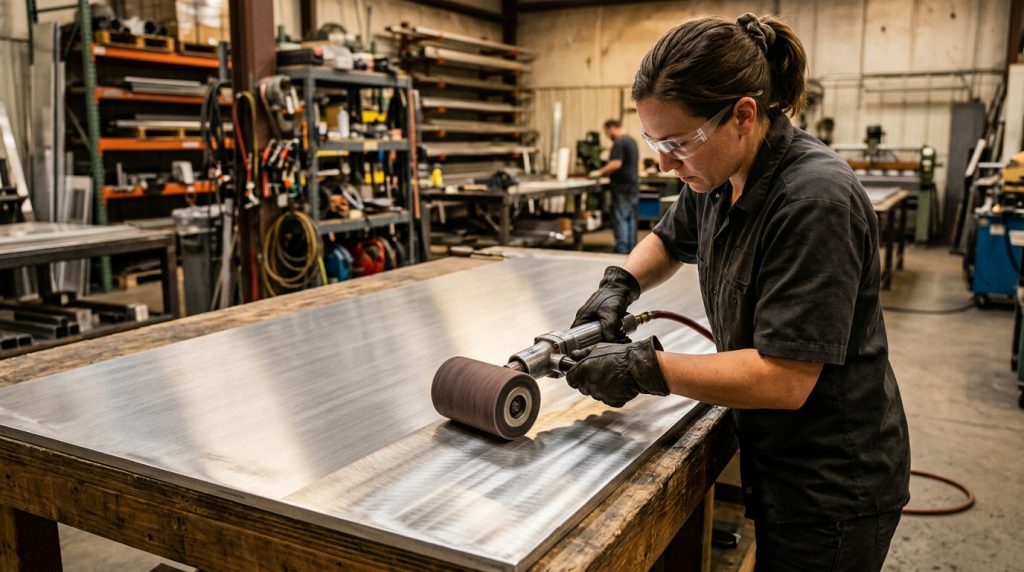
Specifying a perforated or decorative metal screen involves more variables than the pattern drawing usually shows. Material gauge, finish, mounting me...

A signage or facade fabrication project moves through a defined sequence of stages between an architect’s drawing and a finished, installed piec...