For landscape architects, developers, hospitality designers and landscape contractors
Coordinate fabricated metal planters with the landscape design and the surrounding architecture. If your project requires custom dimensions or a particular finish, submit the proposed layout for a fabrication review. The brief should define the planter shell, liners and interfaces with drainage, irrigation and supporting construction before an order is placed.
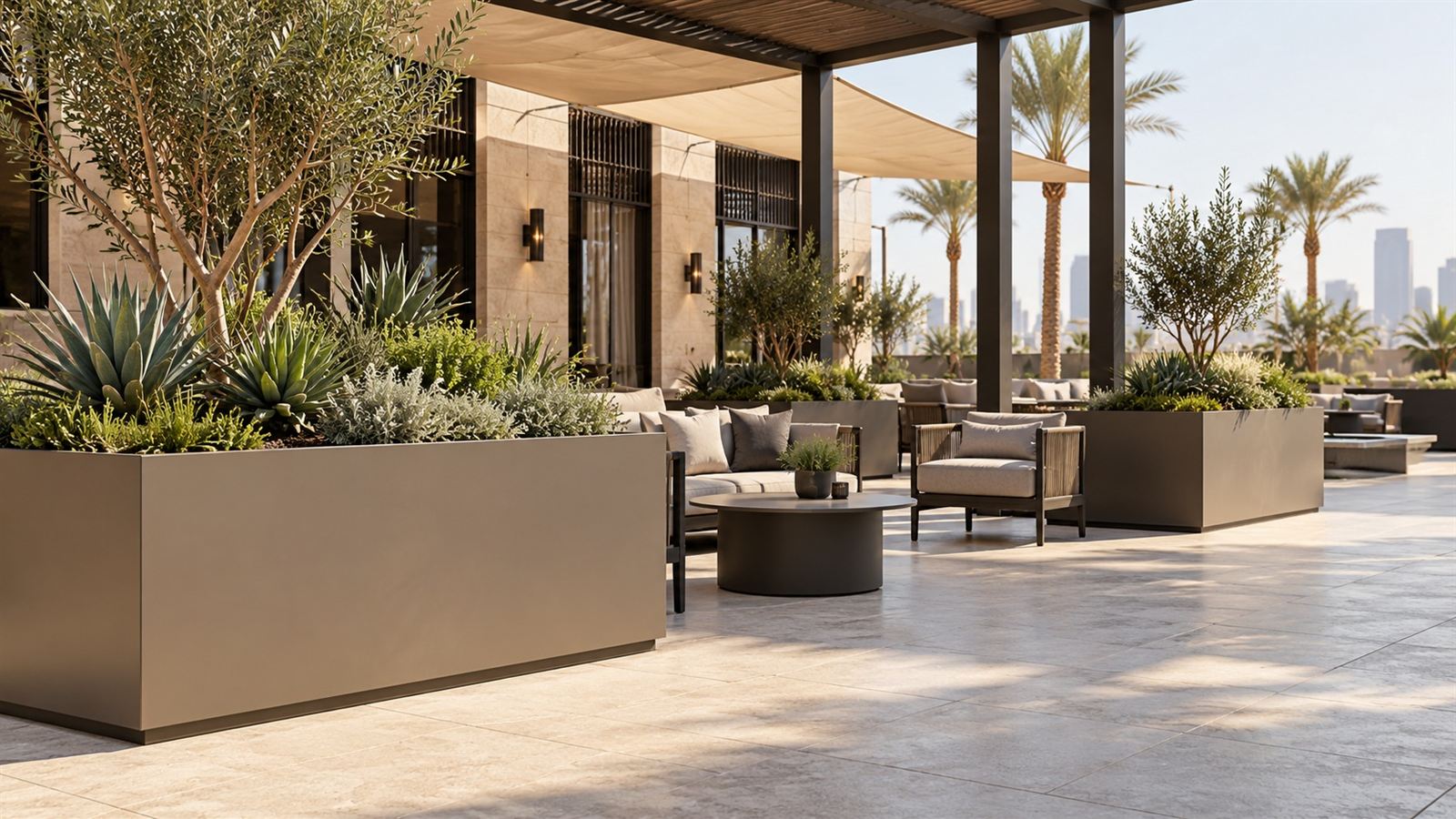
Images on this page are illustrative concepts, not completed Metroplus projects.
Set the form and installation location
Review the planter dimensions, arrangement and relationship with paving, seating or screens. Identify whether units are individual, continuous or assembled from modules on site. Access routes, lifting arrangements and delivery dimensions can affect the construction, particularly on terraces and podiums.
Coordinate planting and water management
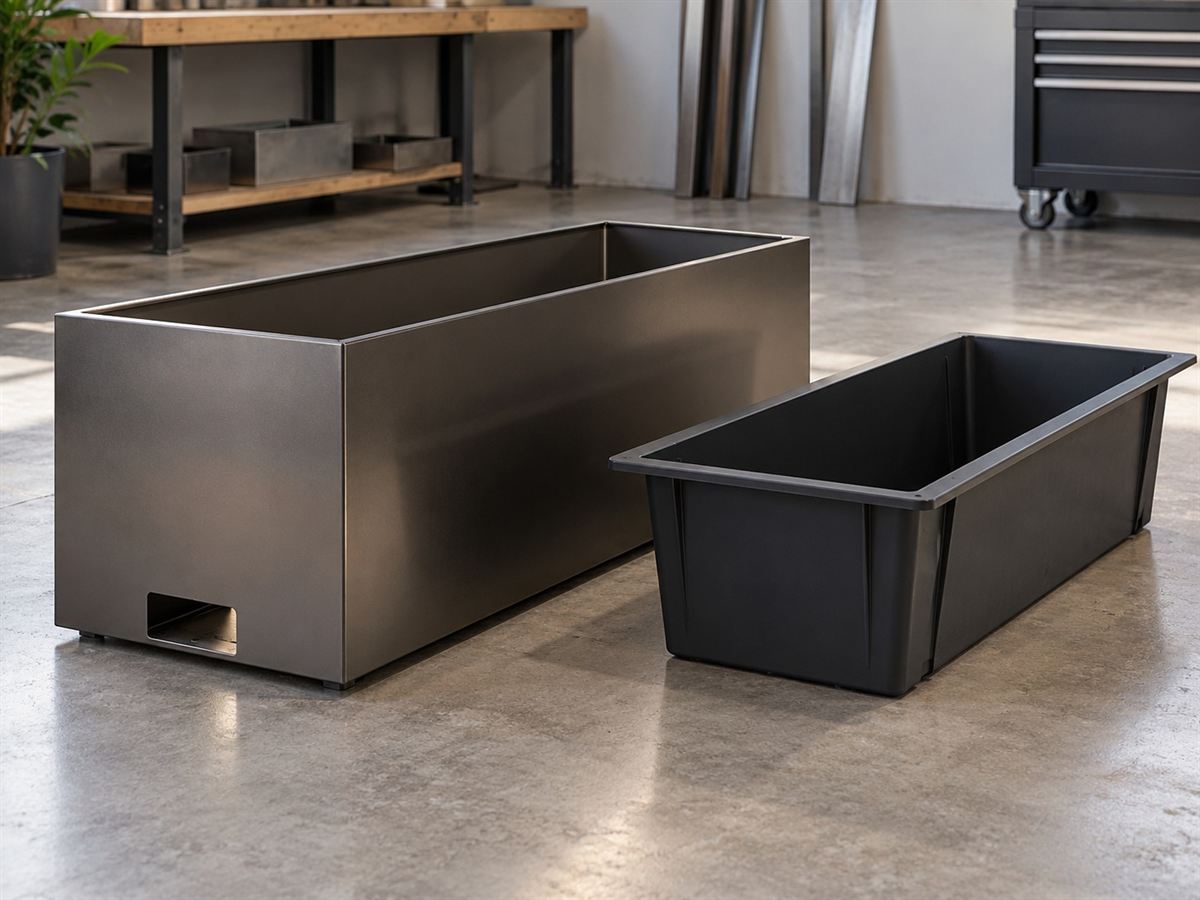
The landscape team should define the planting requirements and associated build-up. Identify who supplies liners, drainage layers, outlets and irrigation connections. The fabrication scope must align with those details so the metal shell is not treated as a complete planting system without the required interfaces.
Review material and finish options
Consider exposure, cleaning and the intended appearance using actual material and finish samples. Agree visible joints, edges and the treatment of contact with adjacent materials. Where weathering finishes are proposed, discuss their effect on surrounding surfaces with the design team before approving the application.
Plan installation and maintenance access
Confirm the supporting surface and responsibility for assessing the fully loaded installation. Keep drainage inspection and replacement access practical. Retain drawings, finish references and care instructions so later maintenance can distinguish the fabricated shell from the planting and irrigation systems.
Related services
Next step
Submit your planter schedule and landscape details. Share the information below so the proposed scope can address your actual project.
Helpful to include: Landscape plan, planter schedule, material intent, substrate, planting build-up, drainage/irrigation details, delivery access, support verification.

